Skip to:
Programme
Julian Anderson
Incantesimi
Sergei Prokofiev
Romeo and Juliet (selections from suites 1 & 2)
Interval
Igor Stravinsky
The Rite of Spring
The performance duration is approximately 2 hours and 5 minutes, including a 20-minute interval.
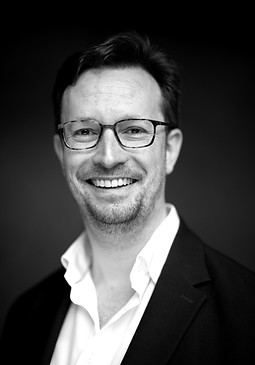
Photo © Em Davis
Welcome
Welcome to an evening of drama, passion, violence, death and rebirth, ritual and rivalry, triumph and tragedy. On the platform is the Guildhall Symphony Orchestra (GSO), out in full force, but you might want to imagine the Barbican Hall transformed into a theatre, the stage set for two of the twentieth century’s most celebrated ballets.
As you listen, it’s hard not to picture the unfolding action, so evocative and brilliantly descriptive is the music in Sergei Prokofiev’s Romeo and Juliet and Igor Stravinsky’s The Rite of Spring. This is orchestral storytelling at its most thrilling, often at its most visceral; from the jagged dance of the Montagues and Capulets to the frantic duel between Tybalt and Mercutio, and from the infamous pounding rhythms in the ‘Auguries of Spring’ to the chillingly tense ‘Sacrificial Dance’.
To open the concert, we hear the orchestra in a very different mode, in Incantesimi by Julian Anderson, Guildhall School’s professor of composition and Composer-in-Residence. As Julian has written, we hear “five musical ideas that orbit each other in ever differing relationships.” Tonight, this becomes a prelude to the tumultuous musical narratives that follow.
It is a particular pleasure to welcome Kerem Hasan, a conductor as at home in the opera house as in the concert hall, joining GSO for the first time with this mighty programme. And it was a delight, too, for the orchestra to perform some of this repertoire to 300 children in an interactive concert at the end of last week. That concert marked the culmination of our latest Link Up project in collaboration with New York’s Carnegie Hall. I hope that as we transport you to the ballet this evening, you will share some of the same excitement that we witnessed from London primary school pupils when they experienced this music. Thank you for joining us.
Armin Zanner FGS
Vice-Principal & Director of Music

Photo © John Batten
Julian Anderson (b. 1967)
Incantesimi (2016)
11 minutes
Incantesimi was composed in 2016 for the Berlin Philharmonic. It was premiered by them and Sir Simon Rattle in June 2016, followed by a European tour. The title is the Italian for ‘magic spells’ or ‘enchantments’; also for ‘incantations’.
The work is generally calm, lyrical and meditative. It is a reflection of my ongoing interests in both Zen Buddhism and the Quaker movement. One possible title I considered for the work was Peace Piece. The work features five basic musical ideas, amongst them gently arching melodies (at first on violins), bell chords (percussion, wind, brass) and a prominent cor anglais solo. The ideas are heard in many different combinations, before coming together for the final tutti. Towards the end two trumpets can be heard playing from offstage positions.
Programme note © Julian Anderson

Sergei Prokofiev (1891–1953)
Romeo and Juliet (selections from suites 1 & 2) (1935–36)
I. Montagues and Capulets
II. The Young Juliet
III. Masks
IV. Romeo and Juliet (Balcony Scene)
V. The Death of Tybalt
VI. Friar Laurence
VII. Dance
VIII. Romeo and Juliet before Parting
IX. Romeo at Juliet’s Grave
44 minutes
We might think of Igor Stravinsky as a great 20th-century musical chameleon, adapting his style in line with the shifting fashions of the time. After all, following The Rite of Spring, he would go on to embrace neo-Classicism and even Schoenberg’s technique of Serialism, whose aim was to destroy conventional melody and harmony. But Stravinsky’s contemporary and fellow Russian Sergei Prokofiev also proved himself able to change his stripes. Like Stravinsky before him, in 1918 Prokofiev left Soviet Russia for Paris, the centre of the European avant-garde. But unlike Stravinsky he returned to Moscow in 1936 – lured partly by the promise of opportunities and privileges at a hazardous time for most artists. According to the Communist Party’s vision, music was not a place for experimentation: it should be uncomplicated and boost the morale of the people. Even before his return, Prokofiev was ready to signal he was shedding his enfant terrible past. Music, he said, should “above all … be melodious; moreover, the melody must be simple and comprehensible, without being repetitive or trivial”. Along with the children’s tale Peter and the Wolf, the ballet Romeo and Juliet was one of the high points of this Party-friendly ‘new simplicity’.
The idea to adapt Shakespeare’s romantic tragedy as a ballet came in December 1934 from Sergei Radlov, artistic director at the Leningrad State Academic Theatre (now the Kirov Theatre), and initially Prokofiev planned an alteration to Shakespeare’s scenario – the devastating double death becoming instead a ‘happy-ever-after’. “Living people can dance,” was the thinking, “the dying cannot.” Prokofiev composed the score mostly in the summer and autumn of 1935 at the Polenovo country estate – a retreat for artists of Moscow’s Bolshoi Theatre. Surrounded by fields and a forest, and with a terrace overlooking the river Oka, he worked for five hours a day, also finding time to swim and play chess as well as tennis. The project faced a number of hurdles and the ballet was not staged in Russia until 1940. Meanwhile, Prokofiev extracted three suites for orchestral performance, the first two in 1936, the third a decade later.
Tonight’s sequence is drawn from the first two suites and opens with the feuding Montague and Capulet families – bracing dissonance leading to the combative march now better known as the theme to BBC One’s The Apprentice. ‘The Young Juliet’ paints the Capulets’ daughter with youthful excitement but also weaves in a reflective flute tune. After the jaunty ‘Masks’ (when Romeo’s friends prepare to crash the ball in disguise) comes the ‘Balcony Scene’, in which Romeo visits Juliet and they declare their love. ‘The Death of Tybalt’ closes Act Two of the ballet; it opens with the duel between Juliet’s cousin Tybalt and Romeo’s friend Mercutio, and ends with Romeo exacting revenge on Tybalt. By contrast comes the musical portrait of the benevolent Friar Laurence, who hatches the plan to – in theory – allow the doomed lovers to sidestep family issues. The spirited ‘Dance’ takes us back to the street-crowds before the ball, while ‘Romeo and Juliet before Parting’ reflects the pain of the lovers’ separation. Pain turns to tragedy as Romeo arrives at Juliet’s grave only to find her apparently dead.
Interval (20 minutes)

Igor Stravinsky (1882–1971)
The Rite of Spring (1911–13, revised 1947)
Part 1: The Adoration of the Earth
Introduction
Auguries of Spring
Dances of the Young Girls
Game of Capture
Round-Dances of Spring
Games of the Rival Tribes
Procession of the Sage
Adoration of the Earth
The Sage
Dance of the Earth
Part 2: The Sacrifice
Introduction
Mysterious Circles of the Young Girls
Glorification of the Chosen One
Evocation of the Ancestors
Ritual Action of the Ancestors
Sacrificial Dance of the Chosen One
33 minutes
The Rite of Spring was the last in the early trilogy of Russian-themed ballets Stravinsky created for the visionary impresario Sergei Diaghilev, founder of the Ballets Russes company. The composer was only 30 and had already been catapulted to international fame with The Firebird (1909–10) and Petrushka (1910–11), but the premiere of The Rite had been especially anticipated. Among the audience were Ravel, Delius and Picasso. So too was Debussy, who had heard a piano playthrough by Stravinsky and declared he was awaiting the premiere “like a greedy child who has been promised sweets”. The conductor on the occasion, which took place at Paris’ Théâtre des Champs-Élysées on 29 May 1913 – was Pierre Monteux who had come away from a different playthrough convinced that the composer was “raving mad”. Monteux remembered “The crudity of the rhythms was emphasised, its stark primitivism underlined. The very walls resounded as Stravinsky pounded away, occasionally stamping his feet and jumping up and down to accentuate the force of the music.”
Some accounts of the ‘riot’ may have been exaggerated but the American writer Gertrude Stein reported laughter, insults and a gentleman in a box being beaten over the head with a cane by a fellow listener. Perhaps with an eye to publicity Diaghilev had seeded the controversy by promising “a new thrill that will doubtless inspire heated discussion”.
Dark streaks had stalked through Stravinsky’s previous two ballets – the evil sorcerer Kashchey and his hideous cronies in The Firebird, and the malevolent ghostly titular puppet in Petrushka. Subtitled ‘Scenes of Pagan Russia in Two Parts’, The Rite concerns the primitivism of ancient Russian tribes and the disturbing ritual sacrifice of a young woman to appease the God of Spring.
With youthful vision and audacious skill, Stravinsky imbued the score with bracing dissonances, complex destabilising rhythms and densely layered textures. More than 110 years after its premiere, the effect is still both exhilarating and overwhelming. Leonard Bernstein called it a “monument to rhythm”; Pierre Boulez simply “the cornerstone of modern music”.
Part One, The Adoration of the Earth, opens with an effortful birth – the famous high bassoon solo, borrowed from a Lithuanian folk song. The awakening of spring that emerges from it, with its growing chorus of birds and beasts, is no pastoral idyll but reflects Stravinsky’s recollection that the season “seemed to begin in an hour and was like the whole earth cracking”. Brutal chords rain down in ‘Auguries of Spring’, after which the search begins for the Chosen One to be sacrificed. An alarming Presto follows in the ‘Game of Capture’ and after two further dances comes the most brutal and frenzied music of all, for the ‘Procession of the Sage’ and ‘Dance of the Earth’, which ends abruptly, mid-climax.
In Part Two, The Sacrifice, we enter the realm of night with a mystical Introduction. Some of the most heightened music comes with the ‘Glorification of the Chosen One’ as the victim is isolated, signalled by eleven almighty thwacks on timpani, bass drum and strings. Finally, in the ‘Sacrificial Dance’ the victim performs her duty in a dance to the death – enacting the most extreme version of the truth that the renewal of nature must come at a cost.
Programme notes © Edward Bhesania
.jpg)
Photo © Marco Borggreve
Kerem Hasan
conductor
Kerem Hasan is regarded as one of the most exciting young British conductors. Winning the prestigious Nestlé and Salzburg Festival Young Conductors Award in the summer of 2017 laid the foundation for his flourishing international career. From September 2019 to June 2023, he served as Chief Conductor of the Tiroler Symphonieorchester in Innsbruck. Beginning in the 2025/26 season, he took up the position of Principal Guest Conductor with the Noord Nederlands Orkest.
The 2025/26 season opened with a particular highlight: Hasan conducted a new production of Jake Heggie’s Dead Man Walking at English National Opera, with a distinguished cast including Christine Rice, Dame Sarah Connolly and Michael Mayes. Further engagements this season include return invitations to the Yomiuri Nippon, Danish National and Edmonton symphony orchestras, Orquestra Sinfónica do Porto and PHION Orkest. He also makes debuts with the Kammerakademie Potsdam and the Ulster Orchestra in Belfast, and appears several times with the Noord Nederlands Orkest in his new role as Principal Guest Conductor.
Among his recent successes are opera performances at Welsh National Opera (Le nozze di Figaro), Opera North (La rondine), English National Opera (Carmen and Così fan tutte), the Glyndebourne Festival (Die Zauberflöte), with Glyndebourne on Tour (The Rake’s Progress) and at the Tyrolean State Theatre (Samson et Dalila, Rigoletto, The Rape of Lucretia and La traviata).
He has worked with the Royal Concertgebouw, London Symphony, London Philharmonic, City of Birmingham Symphony, ORF Vienna Radio Symphony, SWR Symphony, MDR Leipzig Radio Symphony, Danish National Symphony, Toronto Symphony and Yomiuri Nippon Symphony orchestras, and the Dresden Philharmonic, Musikalische Akademie Mannheim, Tonkünstler Orchestra of Lower Austria, Orchestre National du Capitole de Toulouse and Filarmonica Teatro La Fenice. In North America, he has appeared with the Detroit Symphony, Utah Symphony and Minnesota orchestras.
Kerem Hasan has attended masterclasses with David Zinman, Edo de Waart, Gianandrea Noseda, Esa-Pekka Salonen and Robert Spano. He has gained further experience by assisting his mentor, Bernard Haitink, with the Chicago Symphony, Royal Concertgebouw and Bavarian Radio Symphony orchestras.
In the summer of 2016, Kerem Hasan attended the Conducting Academy of the Aspen Music Festival for the first time. He returned to the festival the following year and subsequently received the Aspen Conductor Prize. In August 2022, he returned to Aspen to conduct the Aspen Chamber Orchestra in concert.
Born in London in 1992, Kerem Hasan studied piano and conducting at the Royal Conservatoire of Scotland. He later deepened his conducting training at the Zurich University of the Arts under the guidance of Johannes Schlaefli.
Guildhall Symphony Orchestra
Anderson & Prokofiev
Violin I
Ola Lenkiewicz*
Kayla Nicol
Helena Thomas
Malena Benavent Gimeno
George Lawson
Tanya Perez Jovetic
Lichen Cai
Grace Powell
Camille Said^
Pavla Bedrichova
Laura Hussey
Jess Hendry
Gabriella Pedditzi
Hayun Lee
Ivelina Ivanova^
Violin II
Elise Wiesinger*
Giulia Pianini Mazzucchetti
Elena Toledo
Julie Piggott
Lewis Lee
Joana Vila Cha Ribeiro
Michelle Kolesnikov
Helen Rutledge
Ludwika Borowska
Natalia Lerch
Colby Chu
Yuxi Yang
Francisca Davies-Attwood
Hana McDowell
Julieanne Forrest
Viola
Mat Lee*
Jake Montgomery-Smith
Rebekah Dickinson
Sean Lee
Emily Clark
Charlie Potts
Declan Wicks
Josh Law
Leeloo Creed
Sirma Baramova
Teresa Macedo Ferreira^
Cello
Caleb Curtis*
Daniel Mihailiuc
Anoukia Nistor
Josh Lucas
Sophie Naden-Johns
Alice Abram
Matthew Roberts
Gabriel Webb
Doireann Ní Aodáin
Weilai Gu
Zijie Han
Tallulah Halcox
Double Bass
Annabel Beniston*
Caetano Oliveira
Anton Avis
Aarón Aguayo Juárez
Izzy Nisbett
Chiu Yung Chan^
Strahinja Mitrović
Melisande Lochak^
Flute
Rachel Howie*
Emily Moores (piccolo)
Piccolo
Laura Jastrzebska
Oboe
Oliver Brown*
Miriam Cooper
Cor Anglais
Laura Ritchie
Clarinet
Sofia Mekhonoshina*
Pip Tall
Bass Clarinet
Ben Adams
Tenor Saxophone
Joe Pollard
Bassoon
Maria O’Dea*
Lucy Powell Davies
Contrabassoon
Billy Harrold
Horn
Henry Ward*
Amelia Lawson
Katie Parker
Conrad Thorndike
Sinead McEvoy
Trumpet
Sam Balchin*
Alice Newbould
Offstage Piccolo Trumpet
Nina Garvey*
Samuel Tarlton
Cornet
Nina Garvey
Trombone
Sam Cox*
Tom Peacock
Bass Trombone
Jamie Cadden
Tuba
Isaac Giaever-Enger
Timpani
Reuben Hesser
Percussion
Kevin Ng*
Ali Ayaz
Cláudia Gonçalves
Engin Eskici
Callum Speirs
Harp
Ellie Wood*
Naomi Drew
Piano & Celeste
Mark Zang
* Section principal
^ Guest Alumni player
Names and seating correct at time of publication.
Guildhall Symphony Orchestra
Stravinsky
Violin I
Ola Lenkiewicz*
Kayla Nicol
Elena Toledo
Julie Piggott
Lewis Lee
Joana Vila Cha Ribeiro
Michelle Kolesnikov
Helen Rutledge
Ludwika Borowska
Natalia Lerch
Colby Chu
Yuxi Yang
Francisca Davies-Attwood
Hana McDowell
Sophia Kannathasan
Julieanne Forrest
Violin II
Elise Wiesinger*
Giulia Pianini Mazzucchetti
Helena Thomas
Malena Benavent Gimeno
George Lawson
Tanya Perez Jovetic
Lichen Cai
Grace Powell
Daisy Elliot
Pavla Bedrichova
Laura Hussey
Jess Hendry
Ivelina Ivanova^
Hayun Lee
Camille Said^
Viola
Mat Lee*
Jake Montgomery-Smith
Rebekah Dickinson
Sean Lee
Emily Clark
Charlie Potts
Declan Wicks
Josh Law
Leeloo Creed
Sirma Baramova
Teresa Macedo Ferreira^
Cello
Caleb Curtis*
Daniel Mihailiuc
Anoukia Nistor
Josh Lucas
Sophie Naden-Johns
Alice Abram
Matthew Roberts
Gabriel Webb
Doireann Ní Aodáin
Weilai Gu
Zijie Han
Tallulah Halcox
Double Bass
Annabel Beniston*
Caetano Oliveira
Anton Avis
Aarón Aguayo Juárez
Izzy Nisbett
Chiu Yung Chan^
Strahinja Mitrović
Melisande Lochak^
Flute
Lara Ali*
Daniel Pengelly
Laoise Corrigan (piccolo)
Piccolo
Molly Gribbon
Alto Flute
Cyrus Lam
Oboe
Elizabeth Loboda*
Miriam Cooper
Jemima Inman
Aliyah Nelson (cor anglais)
Cor Anglais
Lidia Moscoso
Clarinet
Margot Maurel*
Rosa Jones
Kacper Bryg (bass clarinet)
E-Flat Clarinet
Kathryn Titcomb
Bass Clarinet
Kosuke Shirai
Bassoon
Miriam Alperovich*
Lucy Powell Davies
CJ Brooke
Billy Harrold (contrabassoon)
Contrabassoon
Aidan Campbell
Horn
Sarah Pennington*
Sam Warburton
Dan Hibbert
Ping-Wei Wu
Owen McClay
Ima Kirkwood
Amelia Lawson (wagner tuba)
Thomas Pinnell (wagner tuba)
Henry Elliot
Trumpet
Florence Wilson-Toy*
Amelia Stuart
Sean Hartman
Alex Smith
Freya McGrath
Piccolo Trumpet
Samuel Tarlton
Bass Trumpet
Andy Leeming
Trombone
Ben Loska*
Robbie Palmer
Bass Trombone
Jamie Cadden
Tuba
Stanley Aitken*
George Good
Timpani
Callum Speirs*
Bryony Che
Percussion
Cláudia Gonçalves*
Ava Kinninmonth
Sum Yin Ng
Dominic Kamel
* Section principal
^ Guest Alumni player
Names and seating correct at time of publication.
Ensembles, Programming & Instrument Manager
Phil Sizer
Orchestral Librarian
Anthony Wilson
Music Stage, Logistics & Instrument Manager
Kevin Elwick
Music Stage Supervisors
Louis Baily
Benjamin Wakley
Thanks
Special thanks to conductor Tess Jackson for helping to prepare the orchestra and to each of the following sectional tutors provided by the London Symphony Orchestra:
Clare Duckworth violin I
Katerina Nazarova violin II
Robert Turner viola
Salvador Bolón cello
Paul Sherman double bass
Sam Walton timpani & percussion
Helen Tunstall harp
Elizabeth Burley piano & celeste
Rosie Jenkins woodwind, harp, piano & celeste
Jim Maynard brass, timpani & percussion
Jeremy Cornes brass, timpani & percussion
Guildhall School Music Administration
Head of Music Administration
James Alexander
Deputy Head of Music Administration (Planning)
Sophie Hills
Deputy Head of Music Administration
(Admissions & Assessment)
Jen Pitkin
Concert Piano Technicians
JP Williams
Patrick Symes
Music Stage Supervisors
Louis Baily
Benjamin Wakley
External Engagements Manager
Jo Cooper
Student Compliance & ASIMUT Performance and Events Systems Manager
João Costa
UG Academic Studies, Composition & Keyboard Departments Manager
Liam Donegan
Music Concert Programmes & Performance Data Manager
Lindsey Eastham
Music Stage, Logistics & Instrument Manager
Kevin Elwick
Opera Department Manager
Steven Gietzen
Strings & Music Therapy Manager
Jack Gillett
ASIMUT & Music Timetable Manager
Brendan Macdonald
Electronic & Produced Music and Collaborative Electives Manager
Barnaby Medland
WBP & Historical Performance Manager
Michal Rogalski
PG Music Studies & Chamber Music Manager
Nora Salmon
Jazz Department Manager
Corinna Sanett
Ensembles, Programming & Instrument Manager
Phil Sizer
Senior Music Office Administrator & EA to the Director of Music & Head of Music Administration
Peter Smith
Music Admissions Manager
Owen Stagg
Vocal Department Manager
Michael Wardell
Jazz Programming & Ensembles Manager
Adam Williams

Forthcoming Events
Summer Season Launch
Thursday 12 March 2026
Guildhall School unveils its Summer Season on Thursday 12 March, bringing a vibrant sweep of music, drama, film and new work. Highlights include the London Schools Symphony Orchestra performing works by Richard Strauss, Wagner, Rachmaninov and alumna Gabriela Ortiz, Miles Davis’ reimagining of Porgy and Bess, the UK premiere of Missy Mazoli’s opera Proving Up, Shakespeare’s As You Like It and the return of the Making It Festival.
Tickets available from Tuesday 24 March (Tuesday 17 March for Guildhall Patrons members). Become a Patron at gsmd.ac.uk/patrons for priority booking.
Robert Levin in Residence: Mozart and Beethoven
Sunday 15 March 2026
Milton Court Concert Hall
Eclectic Voices and conductor Scott Stroman celebrate their 35th anniversary alongside three of their favourite collaborators: Robert Levin, David Dolan and Dame Emma Kirkby.
Tickets: £30 (£20 concessions)
The Gold Medal 2026
Thursday 30 April 2026
Barbican Hall
The final of Guildhall School’s most prestigious music prize returns to the Barbican Hall, presenting three outstanding instrumentalists in concerto performances with the Guildhall Symphony Orchestra, conducted by alumnus Jonathan Bloxham.
Tickets: £14–£25 (£12 concessions)
Donate now:
inspire the
extraordinary

As one of the world’s leading conservatoires, we cultivate exceptional talent — but we can’t do it without you. Our supporters empower students to thrive, shaping the future of the arts.
Enjoy exclusive events, behind-the-scenes access and insider insights while making a real impact. Join our community, donate and choose how you’ll inspire the extraordinary.
visit gsmd.ac.uk/donate-support
or enquire at development@gsmd.ac.uk
Photo © David Monteith-Hodge
Our supporters
Guildhall School is grateful for the generous support of the following individuals, trusts and foundations, City livery companies and businesses, as well as those who wish to remain anonymous.
Exceptional Giving
City of London Corporation
Estate of John Donnelly
The Guildhall School Trust
The Leverhulme Trust
Estate of Evelyn Morrison
John Murray Young Artists’ Fund
Leadership Giving
Foyle Foundation
The Garek Trust
Estate of Brian Hartley
Estate of Eric Pattison
National Philanthropic Trust UK
Principal Benefactors
Amar-Franses & Foster-Jenkins Trust
Foundation for Young Musicians
Estate of Beris Hudson
Christina and Ray McGrath Scholarship
Purposeful Ventures
Nicky Spence Scholarship
Estate of Harold Tillek
Jessie Wakefield Bursary
Garfield Weston Foundation
Estate of Anne Wyburd
Estate of Jane Manning
Major Benefactors
City of London Corporation Education Board
Daniel Craig Scholarships
Dominus and the Ahluwalia Family
Fishmongers’ Company
Leathersellers’ Company
London Symphony Orchestra
Sidney Perry Foundation
Barbara Reynold Award
Rosemary Thayer Scholarship
Wolfson Foundation
Professor Christopher Wood MD FRCSEd
FLSW HonLMRCO
Henry Wood Accommodation Trust
C and P Young MBE HonFGS
Benefactors
Jane Ades Ingenuity Scholarship
Carrie Andrews
Brendan Barns
David Bartley Award
Behrens Foundation
Binks Trust
Timothy Brennan KC
Derek Butler Scholarship
Dow Clewer Foundation
Liz Codd
Sally Cohen Opera Scholarship
Brian George Coker Scholarship
The Cole Bequest
Ian Crewe
Stella Currie Award
D’Oyly Carte Charitable Trust
Professor Sir Barry Ife CBE FKC
and Dr Trudi Darby
Elmira Darvarova
David Family Foundation
Drapers’ Company
Margaret Easton Scholarships
Amy and John Ford HonFGS
Lillian and Victor Ford Scholarships for Drama
Bishop Fox’s Educational Foundation
Albert and Eugenie Frost Music Trust CIO
Gita de la Fuente Scholarship
Mortimer Furber Scholarship
Girdlers’ Company Charitable Trust
Dr Jacqueline Glomski
Ralph Goode Award
Haberdashers’ Company
Faye Hamilton
The Hearn Foundation
Sarah Holford
Huddersfield 1980 Scholarship
Elaine Hugh-Jones Scholarship
Cosman Keller Art and Music Trust
Damian Lewis CBE FGS
Andrew Lloyd Webber Foundation
Alfred Molina FGS
Anne Page
Jane Manning and Anthony Payne Award
Ron Peet Scholarship
David and Margaret Phillips Bursary
Reed Foundation
Ripple Awards
Lady Victoria Robey CBE
Scouloudi Foundation
Skinners’ Company
South Square Trust
Steel Charitable Trust
Hugh Vanstone HonFGS and George Stiles
Barbara Stringer Scholarship
Tobacco Pipe Makers and Tobacco Trade
Benevolent Fund
Frederic William Trevena Award
Edith Vogel Bursary
Wallis Award
Roderick Williams / Christopher
Wood Scholarship
Worshipful Company of Carpenters
Worshipful Company of Chartered Surveyors
Worshipful Company of Grocers
Worshipful Company of Innholders
Worshipful Company of Skinners
Worshipful Company of Tallow Chandlers
Worshipful Company of Weavers
Supporters
Margaret B Adams Award
Adelaide E Alexander Memorial Scholarship
Alexander Technique Fund
Anglo-Swedish Society
Athena Scholarship
George and Charlotte Balfour Award
Alison Balsom Scholarship
Peter Barkworth Scholarship
Maria Bjӧrnson Memorial Fund
Board of Governors’ Scholarship
Ann Bradley
William Brake Foundation
Sir Nicolas Bratza
John S Cohen Foundation
Noël Coward Foundation
Diana Devlin Award
Robert Easton Scholarship
Gwyn Ellis Award
Adam Fabulous Scholarship
Carey Foley Acting Scholarship
Iris Galley Award
James Gibb Award
Jess Gillam Scholarship
Hargreaves and Ball Trust
Hazell Scholarship Fund
Michael and Rosamund Herington
Ironmongers’ Company
Brian Edwards and Mandy King
Gillian Laidlaw HonFGS
Peter Lehmann Bedford Award
Eduard and Marianna Loeser Award
Alison Love - In Memory of Barry MacDonald
Marchus Trust
Narrow Road
Noswad Charity
NR1 Creatives
Ann Orton
John Peach
Peter Prynn
Denis Shorrock Award
Silver Bow Scholarship
Graham Spooner
AM Spurgin Charitable Trust
and John Younger Trust
Steinway & Sons
Caroline Stockmann LGSM HonFCT
Hannah Stone Scholarship
Elizabeth Sweeting Award
Sir Bryn Terfel Scholarship
Thompson Educational Trust
Louise Thompson Licht Scholarship
Kristina Tonteri-Young Scholarship
HWE & WL Tovery Scholarship
Harry Weinrebe Award
Dominic West FGS
Worshipful Company of Carmen Benevolent Trust
Worshipful Company of Dyers
Worshipful Company of Gold
and Silver Wyre Drawers
Worshipful Company of Horners
Worshipful Company of Musicians
Worshipful Company of Needlemakers
Worshipful Company of Wax Chandlers
Guildhall School of Music & Drama
Founded in 1880 by the City of London Corporation
Chair of the Board of Governors
The Hon. Emily Benn
Principal
Professor Jonathan Vaughan FGS
Vice-Principal & Director of Music
Armin Zanner FGS

Guildhall School is provided by the City of London as part of its contribution to the cultural life of London and the nation.
Contact Us
Silk Street,
Barbican,
London,
EC2Y 8DT
+44 (0)207 628 2571
For assistance with digital programmes, please contact digitalprogrammes@gsmd.ac.uk