Skip to:
Programme
Hannah Kendall
The Spark Catchers*
Dmitri Shostakovich
Piano Concerto No 2 in F major, Op 102
Interval (20 minutes)
Jean Sibelius
Symphony No 1 in E minor
Guildhall Symphony Orchestra
Eivind Gullberg Jensen conductor
Antoine Veillerette* conductor
Ryan Sheng piano
The performance duration is approximately 1 hour and 45 minutes, including a 20-minute interval.
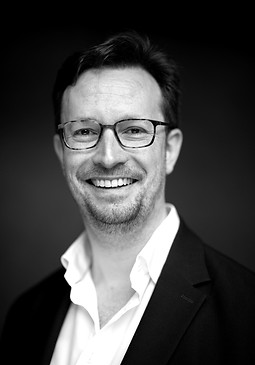
Photo © Em Davis
Welcome
Welcome to this Guildhall Symphony Orchestra (GSO) concert! We are delighted that you have joined us here in the Barbican Hall.
Our programme begins with Hannah Kendall’s The Spark Catchers. Premiered in 2017, the music is inspired by a poem about the women who worked at the Bryant & May match factory in Bow. Poet Lemn Sissay imagines the women responding to sparks in the factory and Kendall’s score evokes the atmosphere and gestures of the poem with circling musical figures and shimmering textures out of which the sparks fly. It has been a particular pleasure for the orchestra to explore Kendall’s music so soon after our New Music Society presented another of her pieces in the Always, Already There festival last month.
Shostakovich’s Piano Concerto No 2 was first played in 1957 by its dedicatee, the composer’s son Maxim. It certainly sounds like music written by a father with his child in mind – the first movement careers with youthful exuberance from one idea to the next, the second movement is exquisitely tender, and the third is cheeky and playful. It’s a tour-de-force for everyone on stage, and this evening we are delighted to introduce soloist Ryan Sheng, now in his final undergraduate year.
Sibelius’ Symphony No 1 (1898–99) completes the programme. This is music on the cusp, historically and musically. It wavers between heroism and uncertainty; there are passages of lyrical nostalgia and stretches that point towards the modern and unknown. We hear Sibelius wrestling with the contradictory legacies left by composers of the previous generation and drawing on features of the folklore-inspired music with which he was associated. In the end, it seems the piece can’t decide whether to close in triumph or to tiptoe off stage.
I know nobody will need to tiptoe off stage tonight – we are in for a treat with GSO under the direction of Guildhall alumnus Antoine Veillerette and guest conductor Eivind Gullberg Jensen. Enjoy the performance!
Armin Zanner FGS
Vice-Principal & Director of Music

Photo © Emily Denny
Hannah Kendall (b. 1984)
The Spark Catchers (2017)
10 minutes
Born in London to Guyanese parents, Hannah Kendall is now based in New York City where she teaches at Columbia University. Many of her works draw on her African-Caribbean heritage, including the one-act chamber opera The Knife of Dawn (2016), based on the imprisonment of Guyanese poet Martin Carter. Last month saw two important world premieres: the unfleshed bells of the inaudible, performed by the SWR Symphony Orchestra in Donaueschingen, Germany, and I have discovered the secret of death, performed by the mezzo-soprano Fleur Barron and the London Symphony Orchestra.
The Spark Catchers is based on a poem by Lemn Sissay, a British poet of Ethiopian descent. Kendall was drawn to the “wonderful dynamism, vibrancy and drive” of the poem, written for the 2012 London Olympics, which is a tribute to the women and girls who worked in the Bryant & May match factory in Bow, East London. Their strike action in 1888 was a landmark in British labour history. The Spark Catchers was commissioned for and first performed at the BBC Proms in 2017 by the majority Black and ethnically diverse orchestra Chineke!
The piece falls into four main sections. The first, ‘Sparks and Strikes’, opens with flickering energy. This drive spills into the second section, ‘The Molten Madness’, which brings a darker tone with its brooding bass lines, and introduces a melody for horns and first violins. Slow-moving and luminous, the third section, ‘Beneath the Stars/In the Silver Sheen’, picks up on the poem’s impression of the starry sky over the Bow factory and the ‘phosphorous’ moon, alluding to one of the volatile chemicals used in match manufacturing.
The flickering energy of the start returns before the final section, ‘The Matchgirls March’, marked by determined, punchy chords. The final coda-like section reintroduces elements of the first two sections, finally concluding, as the composer says, “on a sparkling flourish”.

Dmitri Shostakovich (1906–75)
Piano Concerto No 2 in F major, Op 102 (1957)
I. Allegro
II. Andante –
III. Allegro
20 minutes
Ryan Sheng piano
The late 1940s had been an acutely distressing time for Russian artists. Following clampdowns in literature and poetry, party officials now turned to music. In February 1948, the Central Committee of the Communist Party issued a decree that denounced composers following what was deemed a ‘formalist’, anti-popular trend. At the top of the list was Shostakovich.
With Stalin’s death on 5 March 1953 came a cultural ‘thaw’, an increased freedom on the part of composers. That summer Shostakovich completed his Tenth Symphony with its brutal second-movement scherzo often seen as a portrait of the Soviet leader.
Between the Tenth and Eleventh symphonies came this uncharacteristically sunny concerto, written for his son Maxim, a promising pianist, who premiered the work as soloist on his 19th birthday on 10 May 1957. (Shostakovich had a few years earlier written his Concertino for two pianos for Maxim to play along with a fellow student at the Moscow Conservatory.)
Perky winds, led by the bassoons, open the brisk first movement and the piano enters with a simple tune played with the hands an octave apart. This clarity of texture continues through the whole concerto. A galloping second theme combines echoes of military and circus music (the latter loaded with cheeky ‘wrong’ notes). Soon comes a more intimate tune (again in piano octaves), brutally interrupted by barking orchestral chords, prompting a sneering version of the simple opening theme. The tension builds, erupting in a broad, sweeping version, now in brazen chords, of the piano’s earlier intimate theme. The piano’s youthful cadenza (solo passage) clears the air and the movement closes with crisp military precision.
The serene slow movement opens with a gently melancholic introduction in C minor, which melts into lighter C major as the piano enters with its fragile melody, underpinned by lilting triplets in the left hand. Maxim Shostakovich noted “a touch of sadness here”: the spirit is of longing rather than anguish. This end of the slow movement leads directly into the finale, even more irrepressible than the first movement and crammed with tongue-in-cheek references to the notorious Hanon finger exercises known to generations of piano students. Shostakovich struggled a little with the movement’s technical challenges in his 1958 recording, though at this time he was suffering pain and anxiety arising from reduced function in his hands and would soon be diagnosed with a neurodegenerative disease. To his regret Maxim Shostakovich never recorded the solo part, though he conducted his own son, Dmitri Jr, in a recording in 1985, passing the concerto down another generation.

Jean Sibelius (1865–1957)
Symphony No 1 in E minor (1898–99, rev. 1900)
I. Andante, ma non troppo – Allegro energico
II. Andante (ma non troppo lento)
III. Scherzo: Allegro – Lento (ma non troppo) – Tempo primo
IV. Finale (Quasi una fantasia): Andante – Allegro molto
40 minutes
By the time he completed his First Symphony in 1899, Sibelius had already produced his large-scale symphony Kullervo for soloists, male chorus and orchestra (1891–92) and the four Lemminkäinen Legends (1893–95) – both of which were inspired by tales from the Finnish folk-story collection the Kalevala. The composer had also become celebrated as a hero of Finnish musical nationalism at a time of his country’s ‘Russification’, joining the wave of Finnish national sentiment following Tsar Nicholas II’s 1899 ‘February Manifesto’ which placed political and cultural restrictions on Finland. Sibelius was entering the arena of the symphony – a supposedly abstract form – from a place laden with meaning and narrative.
And, whatever Sibelius would later say to Mahler when they met in 1907 about admiring the “severity of style” and “profound logic” of the symphonic form, there are clearly deeply emotive forces at work in his Symphony No 1. The first movement opens with a primal clarinet solo and a gentle rumbling that gives the impression of a mythical tale. The curtain is lifted with a surging, turbulent theme that unfolds with roaring timpani and soaring horns. Apart from brief episodes of dance-like lightness, the movement as a whole surges with elemental force, later contrasting what seems rooted in the earth with forces that tend towards the supernatural.
The opening, lullaby-like tune of the second movement, murmured by first violins and cellos an octave apart, has the air of a Nordic myth. Its continuation briefly passes to more piquant oboes before a bassoon and clarinet jump in with an archaic, chant-like idea. Pastoral touches never seem far away but there is also music belonging to the dramatic and epic. The return of the opening lullaby at the end enters as a fading memory before drifting away.
Like the first movement, there’s something ‘of the earth’ about the Scherzo. Its bouncing, circling energy is interrupted by a still, enchanted balletic Trio section led by horns before a return to the bounding energy of the opening music.
The finale launches in with an intensely passionate version in the strings of the lonely clarinet solo that opened the first movement. The main part of the movement, Allegro molto (Very fast) pulses with wild energy. The distinctive spirit of Tchaikovsky hovers occasionally, not least over an unashamedly sweeping Romantic tune in the strings, attended by rippling harp. After a lengthy energetic debate of other material, this great tune returns at first under troubled swirling strings, before rising up again. But the symphony ends with a final expression of elemental power, underpinned, as so often and effective in this symphony, by the timpani.
Programme notes © Edward Bhesania

Photo © Mat Hennek
Eivind Gullberg Jensen
conductor
Eivind Gullberg Jensen is widely recognised for his knowledgeable and insightful interpretations. He has been Artistic and General Director of Bergen National Opera since the 2020/21 season, and Chief Conductor of Noord Nederlands Orkest since 2022/23, a position he will hold through the 2026/27 season. Prior to this, he was Chief Conductor of the NDR Radiophilharmonie in Hannover for five years.
The 2026/27 season features returns to Kristiansand Symphony Orchestra, Arctic Philharmonic, Romanian Radio National Orchestra and Orchestre Philharmonique de Monte-Carlo, as well as debuts with Orchestra Sinfonica Siciliana and the orchestra of the Royal Swedish Opera.
Previous season highlights include appearances with the Philharmonia, Gothenburg Symphony, Malmö Symphony, Norwegian Radio, Royal Concertgebouw, Royal Stockholm Philharmonic and Netherlands Radio Philharmonic orchestras, as well as Orchestre Symphonique de Québec, Opéra Orchestre national Montpellier and Orchestre de Paris. Jensen collaborates regularly with many of today’s leading soloists, including Gil Shaham, Leif Ove Andsnes, Truls Mørk, Alice Sara Ott, Javier Perianes, Hélène Grimaud, Alban Gerhardt, Hilary Hahn, Gabriela Montero, Emmanuel Pahud, Yefim Bronfman, Renaud Capuçon, Frank Peter Zimmermann, Valeriy Sokolov, Mari Eriksmoen, Charlotte Hellekant and Guy Braunstein.
Opera has been a strong presence throughout Jensen’s career. Highlights include Festival d’Aix-en-Provence with Simon McBurney’s production of The Rake’s Progress; Die tote Stadt for Bergen National Opera; Asle and Alida for Royal Danish Opera; Tosca and Rusalka for Wiener Staatsoper; Tosca for National Theatre Tokyo; Die Zauberflöte and Der fliegende Holländer for Opéra de Lille; Rusalka for Teatro dell’Opera di Roma; Oedipus Rex and The Rake’s Progress for Finnish National Opera; Jenůfa for English National Opera; Il corsaro and Rusalka for Opernhaus Zürich; and Rusalka, Eugene Onegin and La bohème for Den Norske Opera.
Jensen studied conducting in Stockholm with Jorma Panula and in Vienna with Leopold Hager; his mentors have included Claudio Abbado, Kurt Masur and David Zinman.

Antoine Veillerette
conductor
Antoine Veillerette is a Franco-Belgian composer and conductor based between London and Rome. He is soon to complete the Master of Composition programme at Guildhall School, where he has been studying composition with Julian Anderson and conducting with Timothy Redmond. He previously obtained a Bachelor of Music in composition from Guildhall under the guidance of Julian Anderson and Laurence Crane, graduating with First Class Honours and receiving the Lord Mayor’s Prize for Outstanding Academic Achievement. He also holds a degree in Politics and International Studies from the University of Warwick. Antoine will continue his studies on the masters’ programme in conducting at the Royal Academy of Music, studying with Sian Edwards.
As a conductor, Antoine has worked with orchestras including the National Symphony Orchestra of Ireland and Sinfonia Smith Square, with a particular interest in contemporary repertoire and opera. His operatic work includes conducting the premiere of Sam Meredith’s An Image of Stars, and assisting on productions of Thomas Adès’ Powder Her Face and Oliver Leith’s Last Days. He has assisted conductors including Gianandrea Noseda, Marin Alsop, Joshua Weilerstein, Jack Sheen and Timothy Redmond, collaborating with the London Symphony Orchestra, London Sinfonietta, and Orchestra Haydn of Bolzano and Trento.
As a composer, Antoine’s music has been performed by ensembles and artists including EXAUDI, the Ligeti Quartet, Plus-Minus Ensemble, Heather Roche and Ben Smith, and at venues and festivals across the UK and Europe, including Guildhall School, Warwick Arts Centre and the Festival Ravel in Saint-Jean-de-Luz. He has participated in masterclasses with Michael Jarrell, Ramon Lazkano, Magnus Lindberg and Anssi Karttunen. His forthcoming projects include a new work for violin and ensemble.
Antoine is a co-founder and Music Director of the Silk Street Sinfonietta, an ensemble championing contemporary music alongside landmark works of the 20th and 21st centuries.

Ryan Sheng
piano
Ryan Sheng is from the California Bay Area and began playing the piano aged four. He is currently pursuing his Bachelor of Music at Guildhall School with Professor Ronan O’Hora and holds a Certificate in Performance from the Yale School of Music under Professor Boris Berman. His studies are currently supported by the Edith Vogel Bursary and the Eduard and Marianna Loeser Award.
Ryan has been a prize-winner of international and regional competitions, including the first prize at the 2026 Coulsdon and Purley Concerto Competition in London, first prize and special prize at the 10th Rosario Marciano International Competition Group II; Honorable Mention at the 2024 Wideman Piano Competition; third prize at the 2019 Virginia Waring International Piano Competition Intermediate; second prize, Audience Award and the Young Jury prize at the Emory Young Artist Piano Competition; and first prize at the 2018 Pacific Music Competition. Other awards include the Yale School of Music’s Elizabeth Parisot Prize, Palo Alto Philharmonic Concerto Movement Competition, the 2020 Ross McKee Foundation Award, Golden State Youth Orchestra Solo Competition and first prize at the 2021 Marilyn Mindell Piano Competition.
His upcoming engagements include concerto performances in the United Kingdom, including Rachmaninov’s Second Piano Concerto with the Worthing Philharmonic Orchestra in late November. Previously, in the spring of 2025, he was invited to perform in a series of recitals in Shreveport, Louisiana as part of the Wideman Spring Festival. In 2022 he also appeared as a soloist with the Golden State Youth Orchestra and the Palo Alto Philharmonic in California. Earlier, as a winner of the 2019 PianoTexas Concerto Competition, he performed Mozart’s Piano Concerto No 21, K467 with the Fort Worth Symphony Orchestra under the baton of Maestro Miguel Harth-Bedoya. In Europe, he made his solo debut in Belgium at the 2017 Brussels Music Festival, and from 2022–2024 he performed solo concerts in the Netherlands at International Holland Music Sessions.
Ryan has also participated in renowned festivals with full-merit scholarships, including the 2019 Cliburn Junior Festival, 2019 PianoTexas Young Artist Festival, 2021 Southeastern Piano Festival and the 2023 Rebecca Penneys Piano Festival.
Having been keen on chamber music and a sense of community since he was little, he was a founding member of his local Evergreen Ensemble, which began in 2010. He also developed his musicianship with Young Chamber Musicians for multiple years. For 10 years, he volunteered at Grace Music Institute as a teacher and later as music director. He also curated the Youth Artist Benefit Series by Ensemble San Francisco from 2020–2022.
He formerly studied with Professor Frank Levy and Mrs Anna Polonsky. He has also benefited from the masterclasses of Robert McDonald, John Perry, Olga Kern, Richard Goode, Jonathan Biss, Boris Slutsky, Wei-Yi Yang, Erna Gulabyan, Elizabeth Schumann and Rufus Choi.
Guildhall Symphony Orchestra
Kendall & Shostakovich
Violin I
Tabitha Appel*
Giulia Pianini Mazzucchetti
Elise Wiesinger
Pavla Bedřichová
Kayla Nicol
Yuxi Yang
Amos Sharp
Luke Doyle
Francisca Davies-Attwood
Ivelina Ivanova^
Hayun Lee
Paula Guerra^
Violin II
Kate Simpson*
Daisy Elliott
Julie Piggott
Tanya Perez Jovetic
Joana Vila Chã Ribeiro
Cecilia Loughney
Natalia Lerch
Gabriella Pedditzi
Benedict Wong^
Hana McDowell
Shuo Pang
Viola
Declan Wicks*
Isobel Neary-Adams
Waverly Long
Margaret Renton
Mat Lee
Michael Soza
Sam Wilson
Lydia Atkinson
Bess Cook-Miller
Polly Almond
Cello
George Wilkes*
Matthew Roberts
Sophie Naden-Johns
Ji Hong Kim
Doireann Ní Aodáin
Junheng Zhang
Gabriel Webb
Weilai Gu
Amelia Jack
Double Bass
Caetano Oliveira*
Anton Avis
Annabel Beniston
Becca Whitehouse
Strahinja Mitrovic
Melisande Lochak^
Flute
Emily Moores*
Kiera Exall
Molly Gribbon (piccolo)
Oboe
Miriam Cooper*
Catalina Huss
Clarinet
Dan Thomas*
Adah Charles (bass)
Bassoon
Lucy Powell Davies*
Miriam Alperovich
Horn
Thomas Pinnell*
Jacob Eynon
Dan Hibbert
Zhaoying Ren
Lucy Arbuckle
Trumpet
Samuel Tarlton*
Alex Smith
Trombone
Tom Peacock*
Christopher Trotter
Bass Trombone
Jamie Cadden
Tuba
George Good
Timpani
Kevin Ng
Percussion
Kia Lares*
Evelyn Lee
Harp
Bethany Caswell
Guildhall Symphony Orchestra
Sibelius
Violin I
Tabitha Appel*
Giulia Pianini Mazzucchetti
Julie Piggott
Tanya Perez Jovetic
Joana Vila Chã Ribeiro
Cecilia Loughney
Natalia Lerch
Gabriella Pedditzi
Benedict Wong^
Hana McDowell
Shuo Pang
Paula Guerra^
Violin II
Kate Simpson*
Daisy Elliott
Elise Wiesinger
Pavla Bedřichová
Kayla Nicol
Yuxi Yang
Amos Sharp
Luke Doyle
Francisca Davies-Attwood
Ivelina Ivanova^
Hayun Lee
Viola
Declan Wicks*
Isobel Neary-Adams
Waverly Long
Margaret Renton
Mat Lee
Michael Soza
Sam Wilson
Lydia Atkinson
Bess Cook-Miller
Polly Almond
Cello
George Wilkes*
Matthew Roberts
Sophie Naden-Johns
Ji Hong Kim
Doireann Ní Aodáin
Junheng Zhang
Gabriel Webb
Weilai Gu
Amelia Jack
Double Bass
Caetano Oliveira*
Anton Avis
Annabel Beniston
Becca Whitehouse
Strahinja Mitrovic
Melisande Lochak^
Flute
Laoise Corrigan* (piccolo)
Belle Brunson (piccolo)
Oboe
Elizabeth Loboda*
Laura Ritchie
Clarinet
Fred Bareham*
Birce Kayhan
Bassoon
Maria O’Dea*
Rosie Lupton
Horn
Katie Parker*
Ima Kirkwood
Thomas Jones
Sinead McEvoy
Conrad Thorndike
Trumpet
Charlie Clark*
Jess Malone
Freya McGrath
Trombone
Anna Bailey*
Tom Wood
Bass Trombone
Jamie Cadden
Tuba
Stanley Aitken
Timpani
Johan Smith
Percussion
Kia Lares*
Evelyn Lee
Harp
Grace Ng*
Molly Sharples
* Section principal
^Guest player
Names and seating correct at time of publication.
Ensembles, Programming & Instrument Manager
Phil Sizer
Orchestral Librarian
Anthony Wilson
Music Stage, Logistics & Instrument Manager
Kevin Elwick
Music Stage Supervisors
Louis Baily
Benjamin Wakley
Thanks
Special thanks to Antoine Veillerette for preparing the orchestra, and to each of the following sectional tutors provided by the London Symphony Orchestra:
Julian Azkoul violin I
Caroline Frenkel violin II
Anna Bastow viola
Peteris Sokolovskis cello
Tom Goodman double bass
Daniel Jemison woodwind & harp
Simon Carrington brass, timpani & percussion
Jonathan Lipton brass, timpani & percussion
Dominic Hackett timpani & percussion
Susan Blair harp
Guildhall School Music Administration
Head of Music Administration
James Alexander
Deputy Head of Music Administration (Planning)
Sophie Hills
Deputy Head of Music Administration
(Admissions & Assessment)
Jen Pitkin
Concert Piano Technicians
JP Williams
Patrick Symes
Music Stage Supervisors
Louis Baily
Benjamin Wakley
ASIMUT & Music Timetable Manager
Graeme Booth
External Engagements Manager
Jo Cooper
Student Compliance & ASIMUT Performance and Events Systems Manager
João Costa
UG Academic Studies, Composition & Keyboard Departments Manager
Liam Donegan
Music Concert Programmes & Performance Data Manager
Lindsey Eastham
Music Stage, Logistics & Instrument Manager
Kevin Elwick
Opera Department Manager
Steven Gietzen
Strings & Music Therapy Manager
Jack Gillett
Electronic & Produced Music and Collaborative Electives Manager
Barnaby Medland
WBP & Historical Performance Manager
Michal Rogalski
PG Music Studies & Chamber Music Manager
Nora Salmon
Jazz Department Manager
Corinna Sanett
Ensembles, Programming & Instrument Manager
Phil Sizer
Senior Music Office Administrator & EA to the Director of Music & Head of Music Administration
Peter Smith
Music Admissions Manager
Owen Stagg
Vocal Department Manager
Michael Wardell

Forthcoming Events
Guildhall Big Band: Harlem Renaissance
13 November 2026
Milton Court Concert Hall
An evening celebrating the vibrant and eclectic music of the Harlem Renaissance, from jazz and blues to gospel – marking a major turning point in the cultural and artistic history of New York’s African American community. Joining Guildhall Big Band on stage are narrator and author Kevin Le Gendre, and students from Merton Music Foundation. Directed by Matt Skelton.
Tickets: £15 (£8 concessions) available from Barbican Box Office.
Guildhall Session Orchestra presents Vangelis: 'Albedo 0.39'
21 November 2026
Southbank Centre's Queen Elizabeth Hall,
Belvedere Road SE1 8XX
Celebrate 50 years of award-winning, Greek composer Vangelis’ groundbreaking, cosmic 1976 sophomore album, Albedo 0.39, in this special performance of exciting orchestral treatments, performed by Guildhall Session Orchestra and directed by Mike Roberts.
Part of EFG London Jazz Festival.
Tickets: from £29.50 (£4 booking fee) available from EFG London Jazz Festival and Southbank Centre.
efglondonjazzfestival.org.uk
southbankcentre.co.uk
Sir George Martin: Centenary Weekend Celebration
4 & 6 December 2026
Milton Court Concert Hall
He shaped the sound of The Beatles, Bond and beyond. Celebrate legendary producer and Guildhall alumnus Sir George Martin with a special weekend of concerts, performed by the Guildhall Session Orchestra. Featuring new orchestral arrangements in The Eleanor Rigby Experience: 60 Years of Revolver and an unmissable Sunday tribute concert spanning six decades of Sir George’s pioneering work.
Tickets: £30 (£15 concessions) available from Barbican Box Office. Book both shows and save 10%.

Donate now:
inspire the
extraordinary
As one of the world’s leading conservatoires, we cultivate exceptional talent — but we can’t do it without you. Our supporters empower students to thrive, shaping the future of the arts.
Enjoy exclusive events, behind-the-scenes access and insider insights while making a real impact. Join our community, donate and choose how you’ll inspire the extraordinary.
visit gsmd.ac.uk/donate-support
or enquire at development@gsmd.ac.uk
Photo © Paul Cochrane
Our supporters
Guildhall School is grateful for the generous support of the following individuals, trusts and foundations, City livery companies and businesses, as well as to all our donors in 2025/26 including those who wish to remain anonymous.
If you would like to discuss donating to our work, please contact:
development@gsmd.ac.uk | 020 3834 1561 | 020 4582 2415
Exceptional Giving
City of London Corporation
The Guildhall School Trust
The Leverhulme Trust
Leadership Giving
The Garek Trust
Foundation for Young Musicians
National Philanthropic Trust UK
Wolfson Foundation
Principal Benefactors
Amar-Franses & Foster-Jenkins Trust
Judy Craymer CBE FGS
Christina and Ray McGrath Scholarship
John Murray Young Artists’ Fund
Purposeful Ventures
Professor Christopher Wood MD
FRCSEd FLSW HonLMRCO
Major Benefactors
City of London Corporation Education Board
Richard Buxton
Daniel Craig Scholarship
John Donnelly Scholarship
Fishmongers’ Company
Brian Hartley Scholarship
Professor Sir Barry Ife CBE FKC
and Dr Trudi Darby
Leathersellers’ Company
London Symphony Orchestra
Estate of Sylvia Moys
Estate of Gillian Noakes
Sidney Perry Foundation
Nicky Spence Scholarship
Henry Wood Accommodation Trust
C and P Young MBE HonFGS
Benefactors
Jane Ades Ingenuity Scholarship
Carrie Andrews
Brendan Barns CC
David and Joan Bartley Scholarship
Behrens Foundation
Binks Trust
Timothy Brennan KC
Derek Butler Trust Scholarship
Dow Clewer Foundation
Liz Codd
Cole Bequest
Ian Crewe
D’Oyly Carte Charitable Trust
Elmira Darvarova
Drapers’ Company
Margaret Easton Scholarship
Amy and John Ford HonFGS
Lillian and Victor Ford Scholarships for Drama
Bishop Fox’s Educational Foundation
Albert and Eugenie Frost Music Trust CIO
Girdlers’ Company Charitable Trust
Dr Jacqueline Glomski
Haberdashers’ Company
Faye Hamilton
Sarah Holford
Hanna Johnson and Helen Leiper
Cosman Keller Art and Music Trust
Kirby Laing Foundation
Damian Lewis CBE FGS
Mirlesse Foundation
Alfred Molina FGS
Anne Page
Eric Pattison Award
Reed Foundation
Humphrey Richardson Taylor Charitable Trust
Ripple Awards
Scouloudi Foundation
South Square Trust
Steel Charitable Trust
Caroline Stockmann
Hugh Vanstone HonFGS
and George Stiles HonFGS
Tobacco Pipe Makers and Tobacco Trade
Benevolent Fund
Roderick Williams / Christopher Wood
Scholarship
Worshipful Company of Carpenters
Worshipful Company of Chartered Surveyors
Worshipful Company of Grocers
Worshipful Company of Innholders
Worshipful Company of Skinners
Worshipful Company of Tallow Chandlers
Worshipful Company of Weavers
Supporters
Polly and Laurence Armfield
George and Charlotte Balfour Award
Peter Barkworth Scholarship
Maria Bjӧrnson Memorial Fund
Ann Bradley
William Brake Foundation
Sir Nicolas Bratza
Professor Indira Carr
John S Cohen Foundation
Noël Coward Foundation
The Delaunay
Dominus and the Ahluwalia Family
Robert Easton Scholarship
T.S. Eliot Foundation
Adam Fabulous Scholarship
Carey Foley Acting Scholarship
Gillian Gadsby
Norman Gee Foundation
James Gibb Award
Hargreaves and Ball Trust
Michael and Rosamund Herington
Pixie Holland Award for Music Therapy
Ironmongers’ Company
Brian Edwards and Mandy King
Gillian Laidlaw HonFGS
Peter Lehmann Bedford Award
Eduard and Marianna Loeser Award
Peter and Veronica Lofthouse
Alison Love - In Memory of Barry MacDonald
Marchus Trust
Gillian and Freddie Martin Award
Sir Sam Mendes
Merchant Taylors’ Foundation
Narrow Road
Noswad Charity
NR1 Creatives
Ann Orton
Stanley Picker Trust
Pidem Fund
Peter Prynn
Lady Robey CBE
Ivy Sharp Award
Denis Shorrock Award
Graham Spooner
AM Spurgin Charitable Trust
and John Younger Trust
Steinway & Sons
Thompson Educational Trust
Kristina Tonteri-Young Scholarship
Harry Weinrebe Award
Worshipful Company of Dyers
Worshipful Company of Gold
and Silver Wyre Drawers
Worshipful Company of Horners
Worshipful Company of Musicians
Worshipful Company of Needlemakers
Worshipful Company of Wax Chandlers
Anne Wyburd Scholarship

Stories from the 1880 Society
When Marianne Falk (1939–2026) arrived at Guildhall School to study acting in the late 1950s, she began a relationship with the School that would endure for more than sixty years. Although she trained as an actor, music would soon become one of her greatest loves, bringing her joy, friendship and inspiration for decades to come.
After graduating, Marianne’s appreciation of classical music continued to grow. She was a devoted concert and opera-goer, and an enthusiastic singer with performances ranging from local venues to the stage of the Proms.
Guildhall School always held a special place in Marianne’s heart. She took great pleasure in supporting young singers at the School, recognising the dedication, talent and determination required to pursue a life in the arts. Her generosity helped aspiring artists develop their craft and realise their potential.
That commitment to future generations is reflected in Marianne’s generous gift to Guildhall School in her Will. Through her lasting support, future vocal students will be able to develop their artistry, grow in confidence and pursue their own musical aspirations. It is a wonderful expression of the encouragement and belief she showed to young artists throughout her life.
We celebrate those who inform us of their intention to support Guildhall School in their Will by inviting them to join the 1880 Society – named for the year the School was founded. If you want to join the society, contact Meg Ryan at meg.ryan@gsmd.ac.uk / 020 3834 1561 or to arrange a visit to see how you could make a difference.
Photo © David Monteith-Hodge
Links


For assistance with digital programmes, contact
© 2026 Guildhall School of Music & Drama, Silk Street, London, EC2Y 8DS
Guildhall School of Music & Drama
Founded in 1880 by the City of London Corporation
Chair of the Board of Governors
The Hon. Emily Benn
Principal
Professor Jonathan Vaughan FGS
Vice-Principal & Director of Music
Armin Zanner FGS

Guildhall School is provided by the City of London as part of its contribution to the cultural life of London and the nation.