GUILDHALL SCHOOL


Skip to:
Programme
Diego Jiménez
The Kew Continuum*
Aaron Copland
Fanfare for the Common Man
Leonard Bernstein
Chichester Psalms
Interval (20 minutes)
Gustav Mahler
Symphony No 4
Guildhall Symphony Orchestra & Chorus
Eivind Aadland conductor
Antoine Veillerette* conductor
Mariana Rosas chorus director
Jack Apperley chorus director
Thursday 24 September:
Glenn Tong^ treble
Zoë Jackson soprano
Friday 25 September:
Oliver Griffith^ treble
Laura LeVoir soprano
The performance duration is approximately 1 hour and 55 minutes, including a 20-minute interval.
^member of the Trinity Boys Choir
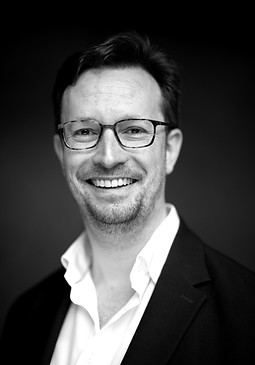
Photo © Em Davis
Welcome
Welcome to the beautiful Milton Court Concert Hall! It’s a treat for us to present Guildhall Symphony Orchestra and Chorus here in this space for our season launch. If you are a regular at our performances, you will know we normally take over the Barbican Hall for this event, but with that venue closed for renovation, we have taken the opportunity to tailor the programme to our own hall and give our new students their first experience of a stage they will come to know well during their studies.
The only challenge was finding enough seats to fit you, our audience, so we are doubling capacity by performing the programme twice. Whichever evening you have chosen to join us, you are in for a treat. There is music that is at times on the edge of silence and there is music that packs quite a punch – hear both extremes come vividly to life in the glorious acoustic of Milton Court. Some of the programme is rooted in the sacred, some is firmly secular, some is inspired by simple folksong, some evokes the grandest of landscapes. And while there is plenty that will be familiar to regular concertgoers, we also have something brand new – the premiere of The Kew Continuum by recent Guildhall alumnus, Mexican-born composer Diego Jiménez, and conducted by Guildhall student Antoine Veillerette.
An advantage of giving two performances is that we can introduce two student soloists for Mahler’s glorious Fourth Symphony, sopranos Zoë Jackson (24 September) and Laura LeVoir (25 September). We also feature Glenn Tong (24 September) and Oliver Griffith (25 September) from the Trinity Boys Choir, who sing the most haunting of melodies in Bernstein’s Chichester Psalms, and we are thrilled to welcome Norwegian conductor Eivind Aadland to direct the Guildhall Symphony Orchestra for the first time.
Thank you for being with us for what I know will be a night – no, two nights – to remember.
Armin Zanner FGS
Vice-Principal & Director of Music

Diego Jiménez (b. 1992)
The Kew Continuum (2026) (world premiere)
6 minutes
The first time I visited Kew Gardens, I needed reminding of what beauty could still do. I arrived carrying more than I realised and left changed.
What struck me most wasn’t any particular flower or tree, but the accumulation beyond the flora: the continuity of growth, care and renewal spread across the grounds, decades and centuries of cultivation folded into a single walk. That sense of continuity became the fanfare’s title and its structure: rather than one continuous arc, the piece keeps returning to a place of stillness, as if retracing the same path through the gardens, never quite the same twice, before being swept away again by turbulent currents. Each return draws me a little more fully into the present.
Kew Gardens holds a rare kind of grandeur, one built not from spectacle, but from patience and attention to the smallest details. That duality runs through the piece: much of the writing is deliberately restrained, glissando textures drifting through the brass like scent moving through the air, never quite locatable, always present, while vibraphone and crotales trace fragile textures above them, left to ring and shift like small objects stirred by a passing wind.
Out of that restraint, the music breaks twice into more overt climaxes. The first arrives as pure sensory abundance: colour and light suddenly made audible. The second is more insistent, carried by rhythm, something closer to a pulse, the sense of a garden quietly and continuously alive beneath its stillness.
The fanfare’s subject is a garden: its plants, its scent, its light. It carries, too, the rediscovery of joy, something closer to ecstasy, and at the same time plenitude. Somewhere underneath both, quietly, is a sense of connection, arriving without warning and receding just as quickly. What stays with me longest, though, is something closer to presence, the feeling of being, for once, fully there. Life has a way of surprising you with the simplest things: a path, a scent, an afternoon, still catching you with their quiet beauty …
Dedicated to Marianne Ruel
Programme note © Diego Jiménez

Aaron Copland (1900–90)
Fanfare for the Common Man (1942)
4 minutes
Music capturing the essence of America – a country this year celebrating the 250th anniversary of its independence – mostly comes in two types: either reflecting the wide landscapes of open plains in the West, or presenting the bustle of modern city life, typically New York. Copland was a master of the former, the expression of which fell in line with his desire in the late 1930s – after thornier works such as the Piano Variations (1930) and Short Symphony (1933) – to find a more accessible style: in his words, “an imposed simplicity”. The change gave birth to some of his most popular works, such as the ballets Billy the Kid (1938), Rodeo (1942) and Appalachian Spring (1943–45), all of which drew on colourful American folk songs and dances.
Fanfare for the Common Man was written during this period, which also coincided with the economic downturn of the Great Depression and the Second World War, two events that threw a new light on the plight of the ordinary person. The Fanfare was one of a series of patriotic concert-openers commissioned by Eugene Goossens, Music Director of the Cincinnati Symphony Orchestra, for the orchestra’s 1942/43 season, which aimed to offer “stirring and significant contributions to the war effort”.
With its dramatic timpani and its unanimous brass painted in primary colours, the Fanfare is both a grand gesture and a hymn to optimism, its success in emblemising America shown by its use in a variety of settings, from memorials and presidential inaugurations to news and documentary themes.

Leonard Bernstein (1918–90)
Chichester Psalms (1965)
I. Psalm 108, vs 2; Psalm 100
II. Psalm 23; Psalm 2, vs 1–4
III. Psalm 131; Psalm 133, vs 1
19 minutes
Thursday 24 September:
Glenn Tong^ treble
Friday 25 September:
Oliver Griffith^ treble
^member of the Trinity Boys Choir
Copland was a longstanding friend, supporter and confidant of Bernstein: the two first met while Bernstein was a student at Harvard. But within less than a decade Bernstein had written his Symphony No 1 ‘Jeremiah’ (1942), the ballets Fancy Free (1944) and Facsimile (1946), as well as his first Broadway show, On the Town (1944). Unlike Copland, he was also a brilliant pianist, while as a conductor he became an overnight sensation in 1943 when, aged 25 (and already Assistant Conductor of the New York Philharmonic), he stood in for an ailing Bruno Walter at only six hours’ notice – and with no rehearsal! – for a concert at Carnegie Hall. By 1947, after conducting the European premiere of Copland’s Symphony No 3 (which incidentally incorporates the Fanfare for the Common Man into its finale), Bernstein was able to address the elder composer as an equal, if not a superior: “Sweetie, the end is a sin. You’ve got to change … We must talk – about the whole of the last movement.” Bernstein’s rich and varied gifts were an affliction as well as a blessing. As Stephen Sondheim said, “For Lenny, there weren’t enough hours in the day. All his life, whatever he was doing, he wished he were doing the other thing.”
In 1964 Bernstein took a year off conducting to focus on composing. He started work on a new musical (the hit West Side Story was already eight years in the past), but this was abandoned. Then came the call from Revd Walter Hussey, the Dean of Chichester Cathedral, for a setting of Psalms. In an article for the New York Times written in clever verse, reporting on his sabbatical, Bernstein revealed:
These Psalms are a simple and modest affair,
Tonal and tuneful and somewhat square,
Certain to sicken a stout John Cager
With its tonics and triads in E-flat major.
But there it stands – the result of my pondering,
Two long months of avant-garde wandering –
My youngest child, old-fashioned and sweet.
And he stands on his own two tonal feet.
The first movement is concerned with raising voices and instruments in praise of God. After a solemn introduction based on a series of short, harmonically tart chord-sequences the movement proper continues in an irregular (but dance-like) 7/4 pulse. A twinkling balletic interlude featuring plucked high strings and harp, fades in before the ending returns to exuberance: a reminder that Bernstein at one stage intended the title of this work to be ‘Psalms of Youth’ before settling on Chichester Psalms.
Featuring a boy treble, the second movement is a pure and poignant setting of Psalm 23 (‘The Lord is my shepherd’), the solo line echoed by angelic upper voices of the choir. This is suddenly soured by the lower voices entering aggressively with Psalm 2 (‘Why do the nations rage?’) – this music being salvaged from a number that had been cut from West Side Story. With the return of the solo voice peace appears restored but a scurrying closing echo of the ‘rage’ music stains the idea of a conclusive resolution.
The third (and longest) movement is in part a setting of Psalm 131, which speaks of renouncing restless striving – something surely close to Bernstein’s heart at the time of writing. The tortured opening melts into luminous serenity before the choir enters with a consoling, swaying 10-beats-to-the-bar theme (a killer tune resurrected from the abandoned musical project from the start of Bernstein’s sabbatical). Chichester Psalms ends with the choir alone, in shiveringly hushed tones, echoing the opening chords of the first movement as it celebrates (in words from the opening of Psalm 133) the joy of all peoples living in unity. Later, when composing his socially engaged, pacifist Mass in 1970, Bernstein wrote: “You scream for peace, you won’t get it that way … only peacefulness can engender peace.”
Interval (20 minutes)
Footnote:
Mass, incidentally, links Guildhall School with Bernstein. In 1986 the composer attended a rehearsal by Guildhall students of the ambitious piece, ahead of a performance as part of the LSO Bernstein Festival. “I came into rehearsal … intending to stay for 15 minutes and I stayed for four hours,” he said in a newspaper interview. Bernstein received Honorary Membership of Guildhall School during his visit and on his death bequeathed seven of his scores to the School, including the one-act satirical opera Trouble in Tahiti, which Guildhall Opera performs in November.

Gustav Mahler (1860–1911)
Symphony No 4 (1892, 1899–1900; rev. 1901–10)
I. Bedächtig, nicht eilen
II. In gemächlicher Bewegung, ohne Hast
III. Ruhevoll, poco adagio
IV. Sehr behaglich, “Wir genießen die himmlischen Freuden”
60 minutes
Thursday 24 September:
Zoë Jackson soprano
Friday 25 September:
Laura LeVoir soprano
More than any composer since Beethoven, Gustav Mahler radically altered the course of symphonic form, broadening its scale and instrumentation, infusing it with vast emotional range and incorporating autobiographical references: never before had a composer written themselves so indelibly into their works.
In recent decades the symphonies of Mahler have become the benchmark on which orchestras – and conductors – around the world are judged. It’s partly to do with the kaleidoscopic philosophical and expressive range driven by his all-embracing outlook. The symphony, Mahler famously said, had to “be like the world. It must embrace everything.” In line with this belief, his symphonies are strewn with references to nature and death (and the beyond) but also with everyday sounds such as folk music, military fanfares or marching bands.
Mahler’s Second and Third Symphonies were monumental works calling for extravagantly large orchestras as well as solo voices and choirs. At around an hour in length, his Fourth is comparatively bijou and more Classical in style – recalling the transparency of Haydn and Schubert before him. Despite being perhaps the most accessible of Mahler’s symphonies, it seemed to challenge critics at the time. The review in New York’s Musical Courier after the work’s first US outing, in 1904, was not a lone voice: “There is nothing in the design, content or execution of the work to impress the musician, except its grotesquerie; and there is not a moment in the whole score to save the lay listener from ineffable ennui.”
As in his previous two symphonies, Mahler in his Fourth turned to one of his earlier songs on texts from Des Knaben Wunderhorn (The Youth’s Magic Horn) – the folk-poetry collection that was popular among German Romantics: ‘Das himmlische Leben’ (‘Heavenly Life’) became the symphony’s finale. It presents an idyllic, child’s-eye view of heaven, where there is dance and song, free-flowing wine, an abundance of fresh produce and unearthly music overseen by Saint Cecilia (the patron saint of music) herself.
The element of childlike simplicity in the finale also appears in the Fourth Symphony’s first movement, with its sleigh-bell opening, its carefree, often lyrical, themes and its tendency to dart from one idea to another. After a high, whistling theme on flutes, the music becomes streaked with darker visions. All this eventually relaxes in a blissful reverie. The movement’s first theme slowly emerges again and gathers pace towards a pithy, almost perfunctory end.
Mahler originally titled the second movement ‘Death strikes up the dance for us’. A slow-whirling Ländler (a rustic version of the waltz) brings a macabre solo on a violin whose four strings are tuned a tone higher than usual. A more relaxed episode, with fluttering wind instruments, twice alternates with the Ländler.
The slow movement is every bit as beautiful as its better-known counterpart in the Fifth Symphony. Its broadly arching first theme is buoyed by a gentle, plucked tread that somehow both marks time and suspends it. A second theme is more troubled and a range of emotional ground is covered in various guises of the first theme. In the climactic outburst near the end, horns briefly foreshadow the opening theme of the finale, but the ending brings a sense of spiritual or physical transfiguration, and the violins rise celestially …
Then comes the child’s view of heaven, “to be sung”, Mahler directs, “in a happy childlike manner: absolutely without parody”. But, as ever with Mahler, there’s a dark undercurrent – expressing the realities of a lamb and the oxen slaughtered for food. There is no grand affirmation at the end but instead a journey onwards into the distance.
Programme notes © Edward Bhesania

Photo © Trine Hisdal
Eivind Aadland
conductor
Eivind Aadland is one of Norway’s leading conductors, who brings both historical rigour and fresh insight to his interpretations of Classical and Romantic repertoire. He is well known to audiences across Australia and East Asia, having toured the region extensively. His creative outlook is informed by a strong engagement with contemporary visual art, which has inspired projects with artists such as Alexander Polzin and Elina Brotherus that explore connections between sound and image.
Aadland took up the position as Chief Conductor and Artistic Director of Tasmanian Symphony Orchestra in 2020, based in Hobart. The success of his relationship with the orchestra has led to a contract extension until the end of 2028, and their new CD of the music of Bartók is released on Rubicon in September 2026. He was previously Principal Guest Conductor of Queensland Symphony Orchestra from 2011 to 2013.
He has also fostered loyal relationships with orchestras around the world, including WDR Symphony Orchestra Köln, with whom he recorded a definitive five-volume set of Grieg’s complete symphonic works. Between 2004 and 2010 he was Chief Conductor and Artistic Leader of the Trondheim Symphony Orchestra, and he has worked with the Belgian National Orchestra, Seoul Philharmonic, Tokyo Metropolitan Symphony and Oslo Philharmonic. Aadland has been named an Artistic Partner of the Belgian National Orchestra for the 2026/27 season.
Aadland regularly works with world-renowned soloists such as Javier Perianes, Cédric Tiberghien, Paul Lewis, Vilde Frang and James Ehnes. His musical sensitivity and calm leadership also make him a favourite collaborator for singers and he has conducted productions of Don Giovanni, Le nozze di Figaro, Die Zauberflöte and Die Fledermaus for the Norwegian National Opera, Oslo. On the concert platform he has worked with Joyce DiDonato, Siobhan Stagg, Samantha Clarke and Morgan Pearse.
Aadland is a devoted and expert collector of contemporary art. His private collection consists of more than 250 works by some 60 artists, encompassing painting, sculpture, photography and video. His love of visual arts connects directly with his profound understanding of music, and he enjoys bringing the forms together in imaginative collaborations with visual artists. Most recently these have included Over Seas, a celebration of water with Elina Brotherus, and a multimedia staging of Grieg’s Peer Gynt with Alexander Polzin. He has conducted Fauré’s Requiem alongside Mat Collishaw’s film Sky Burial and in 2026 he conducts the Belgian National Orchestra in William Kentridge’s Oh, To Believe in Another World, a visual interpretation of Shostakovich’s Symphony No 10.
Aadland is a passionate advocate of Norwegian music and his extensive discography includes works by Norwegian composers such as Irgens-Jensen, Bull, Schjelderup, Groven, Monrad Johansen and Nordheim. He is active in supporting the next generation of musicians through Dirigentloftet, Norway’s mentoring scheme for young conductors, Norway’s National Youth Orchestra, where he becomes Artistic Director in 2027, and youth orchestras including Iceland Symphony Youth Orchestra, Oslo Philharmonic’s Young Philharmonic, Bergen Philharmonic’s BFUng and the Australian Youth Orchestra.

Antoine Veillerette
conductor
Antoine Veillerette is a Franco-Belgian composer and conductor based between London and Rome. He is soon to complete the Master of Composition programme at Guildhall School, where he has been studying composition with Julian Anderson and conducting with Tim Redmond. He previously obtained a Bachelor of Music in composition from Guildhall under the guidance of Julian Anderson and Laurence Crane, graduating with First Class Honours and receiving the Lord Mayor’s Prize for Outstanding Academic Achievement. He also holds a degree in Politics and International Studies from the University of Warwick. Antoine will continue his studies on the master’s programme in conducting at the Royal Academy of Music, studying with Sian Edwards.
As a conductor, Antoine has worked with orchestras including the National Symphony Orchestra of Ireland and Sinfonia Smith Square, with a particular interest in contemporary repertoire and opera. His operatic work includes conducting the premiere of Sam Meredith’s An Image of Stars and assisting on productions of Thomas Adès’ Powder Her Face and Oliver Leith’s Last Days. He has assisted conductors including Gianandrea Noseda, Marin Alsop, Joshua Weilerstein, Jack Sheen and Tim Redmond, collaborating with the London Symphony Orchestra, London Sinfonietta and Orchestra Haydn of Bolzano and Trento.
As a composer, Antoine’s music has been performed by ensembles and artists including EXAUDI, the Ligeti Quartet, Plus-Minus Ensemble, Heather Roche and Ben Smith, and at venues and festivals across the UK and Europe, including Guildhall School, Warwick Arts Centre and the Festival Ravel in Saint-Jean-de-Luz. He has participated in masterclasses with Michael Jarrell, Ramon Lazkano, Magnus Lindberg and Anssi Karttunen. His forthcoming projects include a new work for violin and ensemble.
Antoine is a co-founder and Music Director of the Silk Street Sinfonietta, an ensemble championing contemporary music alongside landmark works of the 20th and 21st centuries.

Photo © Anastasia Jobson
Mariana Rosas
chorus director
Mariana Rosas is an Argentinian conductor based in the UK and Chorus Director of the London Symphony Chorus. In that role she has collaborated with Sir Antonio Pappano, Gianandrea Noseda, Michael Tilson Thomas, Yannick Nézet-Séguin, Nathalie Stutzmann, Susanna Mälkki, Teodor Currentzis, Gustavo Dudamel and Dr André J. Thomas.
Mariana is Director of Choirs at the University of Birmingham, Associate Artist with Birmingham Opera Company, and Conductor at National Youth Choirs (UK). She won Second Prize at the Dima Conducting Competition, in Romania.
She has worked with the Royal Ballet and Opera, Glyndebourne, Royal College of Music, Rundfunkchor Berlin, BBC Symphony Chorus, City of Birmingham Symphony Orchestra Chorus, SWR Symphony Orchestra (Stuttgart), WDR Rundfunkchor (Cologne), London Voices and the West Midlands Inclusive Choir.
Mariana was educated in Italy and Argentina, where she studied at the National University of Arts and the Conservatoire of the City of Buenos Aires “Manuel de Falla”, with maestros Antonio Russo and Saul Zaks. In 2018 she moved to the UK to study at the University of Birmingham with Simon Halsey CBE. She was a Jette Parker Young Artist at the Royal Opera House, and a Britten-Pears Young Artist. Currently, she is a Royal Philharmonic Society Conductor.
Prior to her move to the UK, she was Assistant Professor of Choral Practice at the National University of Arts in Buenos Aires, and has worked as a guest conductor in Denmark, Canada, Germany, Italy and Switzerland. She enjoys working with singers of all abilities and ages, and is engaged regularly as a guest conductor with amateurs and professionals alike.

Jack Apperley
chorus director
Jack Apperley is one of the leading lights of the next generation of choral conductors. He has a growing reputation both at home and abroad for thorough rehearsals filled with energy, humour and precision, as well as compelling concerts championing new works alongside classical mainstays. Under the tutelage of Patrick Russill, he graduated from the Royal Academy of Music where he obtained a Masters in Choral Conducting. He was awarded a Distinction and received the Sir Thomas Armstrong Choral Leadership Prize. In 2025, he was conferred as an Associate of the Royal Academy of Music (ARAM).
Jack is the Musical Director of Goldsmiths Choral Union and Concordia Voices. He is also the Associate Chorus Director of the London Symphony Chorus and the Assistant Conductor of the NFM Choir (National Forum of Music), Wroclaw, Poland.
Jack is in increasing demand as a Conductor and Chorus Master both in the UK and across Europe. Recently, Jack has been engaged by the BBC Singers, BBC Symphony Chorus, City of Birmingham Symphony Chorus, Balthasar Neumann Choir, Hungarian National Choir, the Gothenburg Symphony Orchestra and Chorus as well as the Gothenburg Symphony Vocal Ensemble and Choeur de Radio France.
He has prepared choirs for some of the world’s best conductors, including Sir Simon Rattle, Gustavo Dudamel, Bernard Haitink, Marin Alsop, Natalie Stutzmann and Sir Antonio Pappano.
Trinity Boys Choir
Trinity Boys Choir is one of the world’s most in-demand and well-known boys choirs, famed for its versatility, high musical standards, and distinctive combination of musical discipline and theatrical flair.
The Choir is particularly celebrated for its operatic performances. Boys have sung in The Turn of the Screw, Pelléas et Mélisande and Die Zauberflöte, as well as eleven productions of the Fairies’ chorus in Britten’s A Midsummer Night’s Dream, most recently Sir Peter Hall’s iconic Glyndebourne production.
The Choir has performed at leading international venues and opera houses including La Scala Milan, Opera di Roma, Philharmonie de Paris, Teatro Carlo Felice, the Royal Opera House, Palau les Arts in Valencia, the London Coliseum, Royal Albert Hall, Grange Park and Garsington.
The Choir also features regularly on film and TV soundtracks, including Maleficent and Lord of the Flies, and has performed with artists as diverse as Bing Crosby, the Monteverdi Choir and Sam Smith.
From September 2027, Trinity will welcome girls aged ten and eleven into the Choir.

Glenn Tong has been a member of the Trinity Boys Choir for two years. He sang the role of Miles in the Royal Opera’s production of Britten’s The Turn of the Screw (2026) and also appeared as Moth in Britten’s A Midsummer Night’s Dream at Glyndebourne (2025). Other highlights include Puccini’s Tosca at Glyndebourne (2026), Stockhausen’s Montag aus Licht at the Philharmonie de Paris (2025) and several studio recordings for soundtracks as well as concert tours to Europe.
Glenn will perform as treble soloist in Bernstein’s Chichester Psalms on Thursday 24 September.

Oliver Griffith is thirteen and has been a member of the Trinity Boys Choir for two years. He has enjoyed many projects; some highlights are singing with the Fairy Chorus at Glyndebourne for Britten’s A Midsummer Night’s Dream, recording at Abbey Road studios and Yugen with the Royal Ballet at the Royal Opera House. His most recent choral experience is Tosca at Glyndebourne and Bach’s St John Passion with the London Mozart Players. He hopes to keep singing treble for a while yet!
Oliver will perform as treble soloist in Bernstein’s Chichester Psalms on Friday 25 September.

Zoë Jackson
soprano
Soprano Zoë Jackson is in her final year of Opera Studies at Guildhall School, studying with Janice Chapman and Marcus van den Akker. She previously completed a Bachelor of Music and a Master of Performance in Vocal Studies, also at Guildhall School. A former Durham Cathedral Head Chorister under Miranda Wright, her early training includes the Sage Gateshead Young Musicians Programme, the National Youth Choirs of Great Britain and the Samling Academy.
Zoë was an Oxford International Song Festival Young Artist (2024/25) and a Garsington Opera Alvarez Emerging Artist (2025), performing in Tchaikovsky’s The Queen of Spades, Beethoven’s Fidelio and Donizetti’s L’elisir d’amore, and she has participated in masterclasses led by Nicky Spence OBE, Fatma Said, Thomas Quasthoff (at Wigmore Hall) and Dame Sarah Connolly.
Recent highlights include performing as second soprano soloist in Mahler’s Symphony No 8 with the Bach Choir at St Paul’s Cathedral, her Messiah debut at Durham Cathedral last year and roles in various sets of opera scenes at Guildhall School, including Donna Anna (Don Giovanni), Tatyana (Eugene Onegin) and Helena (A Midsummer Night’s Dream). Upcoming engagements include a lecture-recital at the Oxford International Song Festival with Natasha Loges in October, and her role debut as Amelia in Menotti’s Amelia al ballo in Guildhall School’s production this November.
Zoë won First Prize in the 2025 Susan Longfield Award, and she has been a Help Musicians Sybil Tutton Opera Award holder and an Ian Smith of Stornoway Legacy Scholar.
Zoë is supported in her current studies at Guildhall School by the Gwen Catley Scholarship and the Girdlers’ Scholarship.
Zoë will perform as soprano soloist in Mahler’s Symphony No 4 on Thursday 24 September.

Laura LeVoir
soprano
Soprano Laura LeVoir is a versatile performer maintaining an active career across operatic, concert and art song repertoires. She is currently in her final year of Opera Studies at Guildhall School, studying with Samantha Malk. Her recent stage and concert work includes performing Nuha in the world premiere of Diego Jiménez’s The Vanishing Act, Littler Daughter in the UK premiere of Missy Mazzoli’s Proving Up and Barber’s Knoxville: Summer of 1915. Her upcoming autumn season features engagements as the soprano soloist in Bach’s B Minor Mass, Handel’s Messiah with Orchestra Sul Ponticello and the title role in Guildhall School’s production of Menotti’s Amelia al ballo.
Dr LeVoir’s academic credentials include a Doctor of Musical Arts from the University of Cincinnati College-Conservatory of Music (CCM) with specialisations in voice performance, pedagogy and Polish song, alongside degrees from The Juilliard School and Rice University’s Shepherd School of Music. Her focus on Slavic repertoire earned her first prize in the Kosciuszko Foundation’s Marcella Sembrich International Vocal Competition and the Pulaski Scholarship.
On the concert stage, her credits include the North American premiere and recording of Sixten’s Johannespassionen, alongside extensive solo engagements with ensembles such as the Twin Cities Catholic Chorale, Collegium Cincinnati and the Cincinnati Song Initiative.
Laura is supported in her current studies at Guildhall School by the C & P Young Scholarship, Natalya Romaniw Scholarship and the Beris Hudson Award.
Laura will perform as soprano soloist in Mahler’s Symphony No 4 on Friday 25 September.
Diego Jiménez
composer
Diego Jiménez is a composer, producer, sound designer and educator born in Mexico. His work spans orchestral and chamber music, opera and composition for film, and other audiovisual media. He recently completed the MA in Opera Making & Writing at Guildhall School, where his principal study was with Julian Philips.
Diego began his musical training on classical guitar and piano, later receiving a scholarship to the American Music Institute’s Jazz Academy in Oregon, USA, and studying sound production with Francisco Colasanto. He went on to complete a Bachelor of Music in Composition at the Faculty of Music, UNAM, in Mexico City, studying with teachers including Leonardo Coral, María Granillo and Julio Estrada, and was later awarded UNAM’s Arturo Márquez Extraordinary Chair of Musical Composition scholarship, to study with Arturo Márquez.
His orchestral works have been premiered by ensembles including the National Symphony Orchestra of Mexico, which gave the first performance of Sed de Mar (Thirst for the Sea) at the Palacio de Bellas Artes, and the Eduardo Mata University Youth Orchestra at the Sala Nezahualcóyotl with his work Énklima. The Queen of Mycenae. His scores for stage and screen include the films Revueltas, Sobre la Muerte and Tilman, and his first opera, The Vanishing Act, written with librettist Stuart Lee, which recently premiered at Guildhall School.
Alongside composing, Diego maintains an active career as a mixing, mastering and production engineer, work through which he aims to champion new music and help bring visibility to emerging composers. His music has been performed internationally across the UK, France, USA, Argentina, Colombia and Costa Rica.
Guildhall Symphony Orchestra: Brass & Percussion
Jiménez & Copland
Horn
Thomas Pinnell*
Owen McClay
Thomas Jones
Zhaoying Ren
Liam König
Trumpet
Ed Hinchliff*
Dan McKay
Jess Malone (E-flat)
Alex Smith
Trombone
Miri Wallich*
Tom Hornby
Bass Trombone
George Good
Tuba
Stanley Aitken
Timpani
Johan Smith
Percussion
Beste Gurkey*
Ali Ayaz
Cherry Chung
Dominic Kamel
Rui de Sousa Stayton
Sum Yin Ng
Venus Lam
Guildhall Symphony Orchestra
Bernstein
Violin I
Kayla Nicol*
Tabitha Appel
Sanne Heaven
Natalia Lerch
Julieanne Forrest
Hana McDowell
Daisy Elliott
Ellie Malonzo
Cecilia Loughney
Jan Cerman
Sally Aiko Dando
Asia Ponzanelli
Violin II
Elise Wiesinger*
Francisca Davies-Attwood
Begum Calimli
Anna Perl
Julie Piggott
Yuxi Yang
Amos Sharp
Hayun Lee
Maya De Souza
Jess Hendry
Shuo Pang
Min Wei
Viola
Margaret Renton*
Jackson Kou
Estelle Gonzalez
Jonas Chau
Sam Wilson
Esther Law
Polly Almond
Bess Cook-Miller
Rebekah Dickinson
Cello
Josh Lucas*
Wojtek Prazuch
Morgan Key
Chris Bonardi
Charlotte Hay
Noah Prydal
Ji Hong Kim
Double Bass
Anton Avis*
Aarón Aguayo Juárez
Becca Whitehouse
Anselm King
Isabel Garcia^
Trumpet
Ed Hinchliff*
Dan McKay
Jess Malone
Alex Smith
Trombone
Miri Wallich*
Tom Hornby
Bass Trombone
George Good
Timpani
Johan Smith
Percussion
Beste Gurkey*
Ali Ayaz
Cherry Chung
Dominic Kamel
Kia Lares
Rui de Sousa Stayton
Sum Yin Ng
Venus Lam
Harp
Etty Ashton*
Molly Sharples
Guildhall Symphony Orchestra
Mahler
Violin I
Kayla Nicol*
Tabitha Appel
Begum Calimli
Anna Perl
Julie Piggott
Yuxi Yang
Amos Sharp
Hayun Lee
Maya De Souza
Jess Hendry
Shuo Pang
Min Wei
Daisy Elliott
Violin II
Elise Wiesinger*
Francisca Davies-Attwood
Sanne Heaven
Natalia Lerch
Julieanne Forrest
Hana McDowell
Ellie Malonzo
Cecilia Loughney
Jan Cerman
Sally Aiko Dando
Asia Ponzanelli
Viola
Margaret Renton*
Jackson Kou
Estelle Gonzalez
Jonas Chau
Sam Wilson
Esther Law
Polly Almond
Bess Cook-Miller
Rebekah Dickinson
Cello
Josh Lucas*
Wojtek Prazuch
Morgan Key
Chris Bonardi
Charlotte Hay
Noah Prydal
Ji Hong Kim
Double Bass
Anton Avis*
Aarón Aguayo Juárez
Becca Whitehouse
Anselm King
Isabel Garcia^
Flute
Molly Gribbon*
Emily Moores
Cyrus Lam (piccolo)
Daniel Pengelly (piccolo)
Oboe
Elizabeth Loboda*
Miriam Cooper
Lidia Moscoso^ (cor anglais)
Clarinet
Sofia Mekhonoshina*
Adah Charles (E-flat)
Dan Thomas (bass)
Bassoon
Maria O’Dea*
Lucy Powell Davies
Billy Harrold (contra)
Horn
Jacob Adams*
Polly Bishop
Henry Elliott
Jacob Eynon
Lucy Arbuckle
Trumpet
Alex Smith*
Charlie Clark
Amelia Stuart
Timpani
Ava Kinninmonth
Percussion
Kevin Ng*
Ali Ayaz
Johan Smith
Sum Yin Ng
Harp
Rose Graham
* Section principal
^Guest player
Names and seating correct at time of publication.
Ensembles, Programming & Instrument Manager
Phil Sizer
Orchestral Librarian
Anthony Wilson
Music Stage, Logistics & Instrument Manager
Kevin Elwick
Music Stage Supervisors
Louis Baily
Benjamin Wakley
Guildhall Symphony Chorus
Bernstein
Performing across both nights:
Svana Alexandersdottir
Yasmin Arafah
Moonjoo Bae
Matt Baker
Louis Barnett
Zoe Bezalel
Jasmine Bor
Alex Buchanan
Matthew Budd
Colum Cameron
Andri Casanova
Denisa Cazaciuc
Skylar Chan
Haein Choi
Josie Church
Bethany Clarkson
Gabriel Colegate
Larli Davies
Jed Dunlop
Polina Dyachenko
Caitlyn Evans
Rania Firoozye
Oliver French
Lauren Funkhouser
Jiawei Gao
Hector Garcia Ferreres
Theo Godfrey
Jonathan Harris-Harding
Rhianna Hogg
Ostap Hrudovyi
Yunxi Huang
Leslie Huang
Ondrej Hula
Yucheng Huo
Zuzanna Jankowska
Robyn Jones
Nico Karadimas
Younghyun Kim*
Jaco Kirschenbaum
Evelyn Lee
Zeyu Li
Jojo Liang
Tammi Liu
Samuel Ludlow
Connor Markwell
Issie Martin
Rachel Masclet
Sophie McGetrick*
Kirsty McNaughton*
Ben Michie
James Milner
Aliyah Mitchell Richer
Myome Mortimer-Davies
Zara Musoni
Shayan Nadri
Alejandro Navarrete
Anh Thu Nguyen
Robbie Nicholls
Jess Nokes
Salome Northridge
Michal Peczak
Archie Playle
Anna Poltronieri Tang
Natty Purbrick
Julia Ribeiro Da Cruz
Nathan Richards
Matthew Rose
Sam Ryan
Elisa Sanz Rios
Jess Scott
Lisa Steger
Jeremy Tam
Sam Taylor-Shaw
Rainbow Thrussell
Mady Tozer
Emmi Vaara
Bianca Vancea
Greta Vedrickaite
Rosalie Wang
Yuchu Wang
Jay Weiner
Finn West
Harry Whennell
Jess Whight
Enoch Wong
Jacques Yan
Sijia Ying
Wangzhaole Zhao*
*Soloists from within the chorus
Thanks
Special thanks to chorus directors Mariana Rosas and Jack Apperley, language coach Amos Paran and pianists Peter Jaekel, Matthew Morley and Mark Zang for preparing the chorus, conductor Antoine Veillerette for preparing the orchestra, and to each of the following sectional tutors provided by the London Symphony Orchestra:
Kate Oswin violin I
Csilla Pogány violin II
Anna Bastow viola
Alastair Blayden cello
Tom Goodman double bass
Sharon Williams woodwind
Christian Barraclough brass, timpani & percussion
David Corkhill brass, timpani & percussion
Henry Baldwin timpani & percussion
Susan Blair harp
Guildhall School Music Administration
Head of Music Administration
James Alexander
Deputy Head of Music Administration (Planning)
Sophie Hills
Deputy Head of Music Administration
(Admissions & Assessment)
Jen Pitkin
Concert Piano Technicians
JP Williams
Patrick Symes
Music Stage Supervisors
Louis Baily
Benjamin Wakley
ASIMUT & Music Timetable Manager
Graeme Booth
External Engagements Manager
Jo Cooper
Student Compliance & ASIMUT Performance and Events Systems Manager
João Costa
UG Academic Studies, Composition & Keyboard Departments Manager
Liam Donegan
Music Concert Programmes & Performance Data Manager
Lindsey Eastham
Music Stage, Logistics & Instrument Manager
Kevin Elwick
Opera Department Manager
Steven Gietzen
Strings & Music Therapy Manager
Jack Gillett
Electronic & Produced Music and Collaborative Electives Manager
Barnaby Medland
WBP & Historical Performance Manager
Michal Rogalski
PG Music Studies & Chamber Music Manager
Nora Salmon
Jazz Department Manager
Corinna Sanett
Ensembles, Programming & Instrument Manager
Phil Sizer
Senior Music Office Administrator & EA to the Director of Music & Head of Music Administration
Peter Smith
Music Admissions Manager
Owen Stagg
Vocal Department Manager
Michael Wardell
Jazz Programming & Ensembles Manager
Adam Williams

Forthcoming Events
Opera Double Bill: Menotti’s 'Amelia al ballo' & Bernstein’s 'Trouble in Tahiti'
2 – 9 November 2026
Silk Street Theatre
Italian comedy meets American Satire. Our Autumn Opera Double Bill pairs Gian Carlo Menotti’s sparkling comic opera Amelia al ballo with Leonard Bernstein’s Trouble in Tahiti, a sharp, jazz-inflected portrait of suburban life and marital disconnection.
Tickets: £30 (£15 concessions)
Guildhall Symphony Orchestra
Wednesday 4 November 2026
Barbican Hall
Guildhall Symphony Orchestra presents a dynamic programme spanning three centuries of colourful and energetic works by Jean Sibelius, Dmitri Shostakovich and Hannah Kendall, with guest conductor Eivind Gullberg Jensen.
Tickets: £14–£25 (£12 concessions)
The Eleanor Rigby Experience: 60
Years of Revolver
Friday 4 December 2026
Milton Court Concert Hall
Join us for a weekend double-bill celebrating the centenary of legendary producer and alumnus Sir George Martin. To kick things off, the Guildhall Session Orchestra will perform a spectacular new arrangement of The Beatles’ groundbreaking album, Revolver.
Tickets: £30 (£15 concessions)

Donate now:
inspire the
extraordinary
As one of the world’s leading conservatoires, we cultivate exceptional talent — but we can’t do it without you. Our supporters empower students to thrive, shaping the future of the arts.
Enjoy exclusive events, behind-the-scenes access and insider insights while making a real impact. Join our community, donate and choose how you’ll inspire the extraordinary.
visit gsmd.ac.uk/donate-support
or enquire at development@gsmd.ac.uk
Photo © Paul Cochrane
Our supporters
Guildhall School is grateful for the generous support of the following individuals, trusts and foundations, City livery companies and businesses, as well as to all our donors in 2025/26 including those who wish to remain anonymous.
If you would like to discuss donating to our work, please contact:
development@gsmd.ac.uk | 020 3834 1561 | 020 4582 2415
Exceptional Giving
City of London Corporation
The Guildhall School Trust
The Leverhulme Trust
Leadership Giving
The Garek Trust
Foundation for Young Musicians
National Philanthropic Trust UK
Wolfson Foundation
Principal Benefactors
Amar-Franses & Foster-Jenkins Trust
Judy Craymer CBE FGS
Christina and Ray McGrath Scholarship
John Murray Young Artists’ Fund
Purposeful Ventures
Professor Christopher Wood MD
FRCSEd FLSW HonLMRCO
Major Benefactors
City of London Corporation Education Board
Richard Buxton
Daniel Craig Scholarship
John Donnelly Scholarship
Fishmongers’ Company
Brian Hartley Scholarship
Professor Sir Barry Ife CBE FKC
and Dr Trudi Darby
Leathersellers’ Company
London Symphony Orchestra
Estate of Sylvia Moys
Estate of Gillian Noakes
Sidney Perry Foundation
Nicky Spence Scholarship
Henry Wood Accommodation Trust
C and P Young MBE HonFGS
Benefactors
Jane Ades Ingenuity Scholarship
Carrie Andrews
Brendan Barns CC
David and Joan Bartley Scholarship
Behrens Foundation
Binks Trust
Timothy Brennan KC
Derek Butler Trust Scholarship
Dow Clewer Foundation
Liz Codd
Cole Bequest
Ian Crewe
D’Oyly Carte Charitable Trust
Elmira Darvarova
David Family Foundation
Drapers’ Company
Margaret Easton Scholarship
Amy and John Ford HonFGS
Lillian and Victor Ford Scholarships for Drama
Bishop Fox’s Educational Foundation
Albert and Eugenie Frost Music Trust CIO
Girdlers’ Company Charitable Trust
Dr Jacqueline Glomski
Haberdashers’ Company
Faye Hamilton
Sarah Holford
Hanna Johnson and Helen Leiper
Cosman Keller Art and Music Trust
Kirby Laing Foundation
Damian Lewis CBE FGS
Mirlesse Foundation
Alfred Molina FGS
Anne Page
Eric Pattison Award
Reed Foundation
Humphrey Richardson Taylor
Charitable Trust
Ripple Awards
Scouloudi Foundation
South Square Trust
Steel Charitable Trust
Caroline Stockmann
Hugh Vanstone HonFGS
and George Stiles HonFGS
Tobacco Pipe Makers and Tobacco Trade
Benevolent Fund
Roderick Williams / Christopher Wood
Scholarship
Worshipful Company of Carpenters
Worshipful Company of Chartered Surveyors
Worshipful Company of Grocers
Worshipful Company of Innholders
Worshipful Company of Skinners
Worshipful Company of Tallow Chandlers
Worshipful Company of Weavers
Supporters
Polly and Laurence Armfield
George and Charlotte Balfour Award
Peter Barkworth Scholarship
Maria Bjӧrnson Memorial Fund
Ann Bradley
William Brake Foundation
Sir Nicolas Bratza
Professor Indira Carr
John S Cohen Foundation
Noël Coward Foundation
The Delaunay
Dominus and the Ahluwalia Family
Robert Easton Scholarship
T.S. Eliot Foundation
Adam Fabulous Scholarship
Carey Foley Acting Scholarship
Gillian Gadsby
Norman Gee Foundation
James Gibb Award
Hargreaves and Ball Trust
Michael and Rosamund Herington
Pixie Holland Award for Music Therapy
Ironmongers’ Company
Brian Edwards and Mandy King
Gillian Laidlaw HonFGS
Peter Lehmann Bedford Award
Eduard and Marianna Loeser Award
Peter and Veronica Lofthouse
Alison Love - In Memory of Barry MacDonald
Marchus Trust
Gillian and Freddie Martin Award
Sir Sam Mendes
Merchant Taylors’ Foundation
Narrow Road
Noswad Charity
NR1 Creatives
Ann Orton
Stanley Picker Trust
Pidem Fund
Peter Prynn
Lady Robey CBE
Ivy Sharp Award
Denis Shorrock Award
Graham Spooner
AM Spurgin Charitable Trust
and John Younger Trust
Steinway & Sons
Thompson Educational Trust
Kristina Tonteri-Young Scholarship
Harry Weinrebe Award
Worshipful Company of Dyers
Worshipful Company of Gold
and Silver Wyre Drawers
Worshipful Company of Horners
Worshipful Company of Musicians
Worshipful Company of Needlemakers
Worshipful Company of Wax Chandlers
Anne Wyburd Scholarship
Links
For assistance with digital programmes, contact
© 2026 Guildhall School of Music & Drama, Silk Street, London, EC2Y 8DS
Guildhall School of Music & Drama
Founded in 1880 by the City of London Corporation
Chair of the Board of Governors
The Hon. Emily Benn
Principal
Professor Jonathan Vaughan FGS
Vice-Principal & Director of Music
Armin Zanner FGS

Guildhall School is provided by the City of London as part of its contribution to the cultural life of London and the nation.